
Morocco isn’t a place that performs on command.
It reveals itself gradually.
The first hours can feel loud. Motorbikes squeeze past in alleyways barely wide enough for two people. The call to prayer echoes between sandstone walls. A shopkeeper gestures you in with a smile you can’t quite read yet.
And then, somewhere between your first mint tea and your third wrong turn inside a medina, it begins to settle.
Ten days is enough — if you move intelligently.
Not to see everything.
But to experience the contrast properly.You might be interested in Morocco Travel Guide: Things to Do, Costs, Visas, Transport & Real Travel Tips
This route works because it respects geography:
Marrakech → Atlas Mountains → Sahara → Fes → Chefchaouen → Marrakech → Essaouira
Long drives are separated.
Intense cities are followed by slower landscapes.
No unnecessary backtracking.
It’s not rushed — but it’s efficient.
Days 1–2: Marrakech
Arrival into Marrakech Menara Airport is usually straightforward, but the transition into the medina can be disorienting if you land after dark.
Cars don’t enter fully. You’ll likely be dropped at one of the gates and walk the final stretch through narrow alleyways. It’s not complicated — but pre-arranging a transfer removes the negotiation fatigue after a flight.
If you’re still choosing accommodation, selecting a riad that offers airport pickup simplifies your first hour enormously. It’s one of those small decisions that changes your entire arrival mood.
Day 1: Ease Into the Rhythm
No monuments. No agenda.
Walk toward Jemaa el-Fnaa as the sun lowers. Don’t rush into the centre immediately. Observe from the edges first. Watch the square transform — smoke rising from food stalls, storytellers gathering small circles, drum rhythms building.
Dinner on a rooftop overlooking the square is enough for the first night. Marrakech introduces itself better when you don’t force it.
What to Do in Marrakech in 2 Days
Day 2: Structured Exploration
Morning should be claimed early.
Bahia Palace is best before 9am when groups haven’t yet filled the courtyards. The cedar ceilings and geometric tiles deserve quiet.
From there, move into the souks — but with intention. Attempting to “see it all” leads to exhaustion. Choose one focus: leather, lanterns, textiles. It prevents overwhelm and sharpens the experience.
By midday, the alleys grow warmer and more crowded. Step slightly outside the busiest arteries for lunch. The atmosphere softens immediately.
In the afternoon, Jardin Majorelle provides contrast — bold cobalt walls against desert plants. Tickets do sell out in peak season, so booking ahead avoids wasted time.
If intensity builds, a hammam resets everything. Steam, scrub, rinse. You walk out lighter than you entered.
Evening can be spent in Gueliz if you want modern space and wider streets.
Where to Stay in Marrakech
Sleep location shapes your experience more than most realise.
Inside the medina:
Immersive
Atmospheric
Fully walkable
Outside the medina:
Quieter
Easier car access
Larger properties
And then there is Royal Mansour Marrakech.
Royal Mansour isn’t simply a luxury hotel. Each guest stays in a private riad. Service operates through underground corridors to preserve privacy. It sits just beyond the medina walls — close enough to walk, far enough to retreat.
If that level of stay is on your list, booking well ahead is essential during spring and autumn.
For most travellers, a well-reviewed riad inside the medina offers the most balanced experience.
You can compare Marrakech riads here before arrival — filtering by aircon and airport pickup makes life easier.
Days 3–4: Atlas Mountains & Sahara Desert
This is the commitment section of the itinerary.
Marrakech to Merzouga is about 560 km.
Realistic driving time:
10–12 hours including stops.
There is no train.
The desert is not a quick excursion — and it shouldn’t be treated as one.
What to Do in the Atlas Mountains on the Way to the Sahara
The road climbs into the High Atlas via the Tizi n’Tichka Pass. Villages cling to mountainsides. Terracotta architecture blends into rock.
Worthwhile stops:
Aït Benhaddou (UNESCO ksar)
Ouarzazate
Dades Valley
This day isn’t about rushing. It’s about watching Morocco transform from city to mountain silence.
Many travellers opt for a 3-day Sahara tour starting in Marrakech and ending in Fes. It simplifies logistics and removes the strain of long mountain drives. If driving independently, confirm one-way rental permissions and full coverage insurance.
If coordinating drivers feels overwhelming, comparing organised Sahara tours saves time and reduces stress.
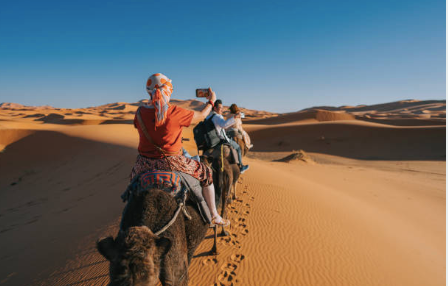
What to Do in the Sahara Desert
The desert doesn’t announce itself dramatically. It emerges gradually. The landscape flattens. Sand rises quietly on the horizon.
From Todgha Gorge — where a short canyon walk is worthwhile — continue toward Merzouga.
Late afternoon typically unfolds like this:
Camel trek into the dunes
Slow arrival at camp
Dinner under canvas
Stargazing in near silence
Camp standards vary widely. Mid-range private tents usually provide the best balance between comfort and authenticity.
Even outside winter, nights become cold. Layers are not optional.
The Sahara’s stillness contrasts completely with Marrakech. Nothing performs. Nothing competes. It simply exists.
Travel insurance is rarely used — but remote terrain makes it sensible.
If you don’t already have coverage, it’s worth checking options before this stretch.
Days 5–6: Fes
Arrival into Fes feels older.
Less curated.
More layered.
The medina here is denser than Marrakech. First entry can feel disorienting. Arriving before sunset helps enormously.
Keep the first evening light. A short wander. Simple dinner. Early rest.
What to Do in Fes in 2 Days
Context matters in Fes.
Hiring a licensed guide for half a day prevents confusion and avoids unofficial “helpers” redirecting you.
Morning highlights:
Bou Inania Madrasa
Al Quaraouiyine Mosque (external view)
Chouara Tanneries
Afternoon:
Nejjarine Museum
Borj Nord panoramic view
Tea in your riad courtyard
Fes rewards patience. It reveals detail slowly.
If you prefer structure, a small-group medina walking tour here saves time and clarifies history.
Days 7–8: Chefchaouen
The shift from Fes to Chefchaouen is immediate.
Blue walls replace earth tones.
The air feels lighter.
Travel time:
3.5–4 hours by bus or private transfer.
There is no train connection.
What to Do in Chefchaouen
Day 7
Check in. Wander without aim. The blue alleyways glow during golden hour.
Dinner near Plaza Uta el-Hammam is simple and atmospheric.
Day 8
Early morning photography before 10am — streets are emptier and light is softer.
Coffee overlooking the Rif Mountains.
Late afternoon walk to the Spanish Mosque viewpoint for sunset.
Optional half-day trip to Akchour waterfalls for light hiking.
Staying inside the medina keeps mornings effortless.
Day 9: The Long Return South
Chefchaouen to Marrakech is long.
Realistic option:
Bus to Fes (~4 hrs)
Train Fes → Marrakech (~7 hrs)
Breaking the journey in Rabat makes it easier if long transit days exhaust you.
Morocco’s distances are not small. Planning realistically prevents burnout.
Day 10: Essaouira
From Marrakech:
2.5–3 hours by bus or car.
After desert and medinas, the Atlantic feels open.
What to Do in Essaouira
Walk the smaller medina
Explore Skala de la Ville ramparts
Eat grilled seafood at the harbour
Beach walk at sunset
Essaouira feels like release.
It works best as a closing chapter.
If visiting on a weekend, booking coastal accommodation ahead is wise — domestic travellers fill it quickly.
Practical Logistics: How to Move Between Cities
Trains connect:
Marrakech
Casablanca
Rabat
Fes
There are no trains to:
Sahara
Chefchaouen
Essaouira
Best combination:
Sahara tour or private driver
Trains between major cities
No car inside medinas
An eSIM activated before arrival simplifies navigation immediately — especially when your riad is down an unnamed alley.
Setting up data before landing avoids airport SIM queues.Get that ESIM for smooth transition
Cash is still required for smaller vendors. ATMs are reliable in cities.
FAQ
Is 10 days enough in Morocco?
Yes — if geographically structured.
Best way to reach the Sahara?
A 3-day tour ending in Fes is the most time-efficient.
Is Morocco safe?
Generally yes in tourist areas. Standard city awareness applies.
Cash or card?
Both. Small vendors prefer cash.
What languages are spoken?
Arabic and Amazigh officially. French widely used. English common in tourism.
Should I rent a car?
Not for Marrakech or Fes. Consider for Atlas flexibility.
Final Word
Morocco doesn’t present itself neatly.
It asks for adaptation.
Noise becomes rhythm.
Silence becomes expansive.
Mountains dissolve into dunes.
Sea air replaces desert dust.
Ten days won’t show you everything.
But if distance is respected and energy balanced, those ten days feel layered rather than rushed.
And Morocco stays — not because of how much was seen, but because of how deeply it was experienced.