The Ultimate Kruger National Park Travel Guide (2026): Everything You Need To Know Before You Go
This post contains affiliate links. If you click through and make a purchase or booking, I may earn a small commission at no extra cost to you. The price you pay is exactly the same either way. I only recommend products and experiences I would use myself.
There is a reason Kruger National Park appears on nearly every serious Africa travel list.
Not because it is the most remote. Not because it is the most exclusive. But because it delivers on the promise of the African bush better than almost anywhere else on the continent, and it does so in a way that is accessible to an enormous range of travellers, from backpackers camping under the stars to honeymooners in private lodges that cost more per night than most people spend on a holiday.
I grew up in Johannesburg with roots in Mpumalanga. Kruger has been part of my life since childhood. And what I have learned over many years of returning is that the people who get the most out of this park are the ones who came prepared. They understood the seasons, they chose the right part of the park for what they wanted to see, they knew the rules, and they gave themselves enough time.
This guide is everything I wish I had been handed before my first visit. Use it to plan, to understand, and to make sure your time in Kruger is exactly what it should be.
Read related post: Best Kruger National Park Lodges: The Complete Guide To Where To Stay in 2026
What Is Kruger National Park?
Kruger National Park is one of Africa’s largest game reserves, covering just under 20,000 square kilometres in northeastern South Africa across the Mpumalanga and Limpopo provinces. It stretches approximately 360 kilometres from north to south and up to 80 kilometres wide at its broadest point, sharing borders with Mozambique to the east and Zimbabwe to the north.
The park was established in 1898 when Paul Kruger, then President of the Transvaal Republic, proclaimed the area a protected game reserve. It was formally declared a national park in 1926 and today forms the heart of a much larger transfrontier conservation area known as the Great Limpopo Transfrontier Park, which links protected land across South Africa, Mozambique, and Zimbabwe.
Kruger is home to over 148 mammal species, 500 bird species, 114 reptile species, 34 amphibian species, 49 fish species, and more than 2,000 plant species. It is one of the most biodiverse protected areas in the world, and it remains the flagship destination for a South African safari.
Read related post: The Ultimate South Africa Travel Guide: Practical, Honest Travel from a Joburg Local
Kruger National Park by Region: Where To Focus Your Time
One of the biggest mistakes first-time visitors make is treating Kruger as a single destination. It is not. It is four distinct regions, each with a different landscape, different dominant wildlife, and a different atmosphere. Where you spend your time inside the park shapes your entire experience.
Southern Kruger: The Best Wildlife Density in the Park
The southern region, running roughly from the Crocodile River boundary in the south up to Skukuza and across to Lower Sabie, is the most popular section of the park and for very good reason. The Sabie and Crocodile rivers provide permanent water year-round, which concentrates wildlife throughout the year and produces the most reliable Big Five sightings in the park.
This is the area with the highest predator density. Lions, leopards, wild dogs, cheetah, and hyena are all present and regularly sighted. There are reputedly more leopards per square kilometre in the riverine bush along the Sabie River than anywhere else in South Africa. The road network here is the best developed in the park, and the camps at Lower Sabie and Skukuza are the most well-resourced.
The tradeoff is that the south is also the busiest part of the park, particularly in peak season. If you want to avoid vehicle congestion at popular sightings, plan your drives for early morning before the majority of day visitors enter, and explore the secondary S-roads rather than staying on the main tar routes.
Best camps: Lower Sabie, Skukuza, Crocodile Bridge, Berg en Dal
Best for: First-time visitors, Big Five, predators, leopards, rhino
Central Kruger: Open Plains and Lion Country
Central Kruger, centred around Satara rest camp, offers a different landscape entirely. The open grasslands and thornveld plains here are prime territory for lions, which is why Satara consistently delivers some of the best lion sightings in the park. Cheetah are seen here more regularly than anywhere in the south, because the open terrain suits their hunting style.
The central region also holds large herds of buffalo, zebra, and wildebeest moving across the plains, which in turn attracts every predator that follows them. The Skukuza-Satara tar road (H1-2, H1-3) transitions from river basin to central grasslands and offers the best chance of spotting lions in Kruger.
Best camps: Satara, Orpen, Tamboti Tented Camp
Best for: Lions, cheetah, large herds, open landscape photography
Northern Kruger: Remote, Wild, and Worth the Effort
Northern Kruger, from the Olifants River upward through mopane woodland to the Limpopo River at the Zimbabwe border, is a completely different Africa. The landscape is dominated by mopane shrubs and baobab trees. The crowds thin dramatically. And the wildlife, while less dense than the south, includes species rarely seen elsewhere in the park.
Wildlife in the north is less dense, but visitors find rare species like roan antelope, sable, and tsessebe. Birdwatching is phenomenal, with Pel’s fishing owl, carmine bee-eaters, and hornbills among the highlights.
The northern region rewards patience and time. It is not where you go for guaranteed Big Five sightings on a two-night trip. It is where you go when you want to feel genuinely remote in one of Africa’s great wilderness areas, and when birding, rare antelope, and the ancient baobab landscape matter as much as predator encounters.
Best camps: Shingwedzi, Punda Maria, Mopani, Bateleur Bushveld Camp, Sirheni Bushveld Camp
Best for: Experienced safari travellers, birding, rare antelope, solitude, repeat visitors
The Best Self-Drive Routes in Kruger
Kruger has an extensive road network divided into two main types. H-roads are the main tarred highways connecting the major camps. S-roads are gravel secondary routes that go deeper into the bush and generally offer more intimate wildlife encounters and better sighting opportunities away from the crowds.
You can see lots of wildlife and visit all key sites and areas by just using the H and S roads. While a 4×4 vehicle is not needed for the H and S roads, a vehicle with high clearance gives you the best chance of seeing wildlife as you can see over the tops of bushes and other vegetation.
H4-1: Skukuza to Lower Sabie (The Best Road in Kruger)
The H4-1, which runs between Skukuza and Lower Sabie, is the undisputed champion for a comprehensive experience. This route runs parallel to the Sabie River, a lifeblood for the park’s wildlife. The riverine bush provides perfect cover for leopards, while the open areas are ideal for lion prides and large herds of elephant and buffalo. Allow at least three hours and stop at every waterhole.
H1-2 and H1-3: Skukuza to Satara (Best for Lions)
For the best chance of spotting lions in Kruger, drive the Skukuza-Satara tar road (H1-2, H1-3), which transitions from river basin to central grasslands. Look for elephants near the N’watindlopfu River and big-game action around Satara, known for buffalo and lions. Stop at Tshokwane for food and refreshments. This 93-kilometre route needs at least five hours to do properly.
H10: Lower Sabie to Tshokwane (Lebombo Views and Eastern Plains)
One of Kruger’s most scenic drives, the H10 offers sweeping views over the eastern grasslands and Lebombo mountains. Look for cheetahs, lions, hyenas, and large herds of grazers. Stop at Mlondozi Dam for birding and Nkumbe Hill (394m) for panoramic views. Allow two and a half hours minimum including stops.
S1: Doispane Road (Best for Predators on Foot)
One of Kruger’s best-kept secrets among regular visitors. The Doispane Road is a gravel S-road running south of Skukuza that produces consistently outstanding predator sightings. The Doispane Road (S1) and River Road (H4-1) offer high concentrations of predators, especially wild dogs and cheetahs.
Self-Drive Tips That Make a Real Difference
Drive slowly. There is one uncontested truth about enjoying Kruger: the slower you drive, the more you will see. Wildlife blends naturally into the environment and can easily be missed if you are speeding.
Stop at waterholes, on river banks or shade points and switch off the engine. These are often the most rewarding moments as you witness the passing pageant of animal life and the central role that water plays in governing animal relationships.
Stay in your vehicle at all times unless you are at official get-out points. Wildlife is used to vehicles, which have an accepted silhouette, whereas a human shape signifies that of a predator, which will cause alarm.
Look at maps and try to find roads that follow rivers, even completely dry rivers, as elephants often create small pools of water in the driest of riverbeds.
The best drives felt unhurried and observant, with lots of stops, lots of scanning, and a willingness to let the day unfold slowly.
Plan your game drives around wildlife activity times. Early morning from gate opening to around 9am and late afternoon from 4pm until gate closing are when animals are most active. The middle of the day is when most wildlife rests, and you should use that time for lunch at a picnic site or rest in camp.
Entry Fees and Costs for 2026
All visitors to Kruger pay a daily conservation fee for every day spent inside the park. Keep your receipt. Once paid, an exit permit is issued. Without one, exit will be refused.
Conservation Fees: November 2025 to October 2026
For RSA guests with a valid ID or Driver’s Licence: adults pay R134 per day and children under 12 pay R67. SADC country nationals pay R275 per adult per day. International visitors pay R602 per adult per day.
Members of SANParks’ WILD loyalty programme do not pay daily conservation fees, provided proof of identity and their WILD card are shown on arrival.
There is a mandatory 1% Community Levy not included in the daily rates, which is added to all accommodation and activity reservations.
Important Practical Notes on Fees
All gates of Kruger National Park are cashless. Payments can only be made by credit card. One transaction per vehicle saves time.
All South African adults must have their ID or Driver’s Licence on entry in order not to be charged international entry rates.
South African citizens must provide proof of South African ID, South African Driver’s Licence, or South African Passport on arrival. This proof is accepted in original, electronic, or certified paper copy.
Is the SANParks Wild Card Worth It?
The Wild Card gives one year’s unlimited entry to 80+ National Parks, Reserves, and Resorts around Southern Africa. Membership is valid from the date of purchase for 365 days and is available for an individual, couple, or family of any two adults and up to five children under the age of 18.
For South African residents who plan to visit Kruger for more than one trip per year, or who plan to combine Kruger with Addo Elephant National Park, Pilanesberg, or other SANParks destinations, the Wild Card pays for itself quickly.
Gate Times: What You Need to Know
Gates open and close at specific times that vary by season, and missing gate closing time is not a minor inconvenience. It results in a penalty fee and significant frustration.
Gate times vary seasonally but follow this general pattern across the year:
| Month | Gate Opening Time | Gate Closing Time |
|---|---|---|
| January – February | 05:30 | 18:30 |
| March | 05:30 | 18:00 |
| April | 06:00 | 18:00 |
| May – July | 06:00 | 17:30 |
| August – September | 06:00 | 18:00 |
| October | 05:30 | 18:00 |
| November – December | 04:30 | 18:30 |
Always confirm gate times on the SANParks website before your trip as these can be updated. And always allow more time than you think you need to get back to your gate before closing.
In emergencies only, late arrivals for guests with pre-booked accommodation at camps within 10km from an entrance gate are allowed. No arrivals later than 21:00 under any circumstances. An additional cost per vehicle applies. Late arrival must be arranged in advance with the gate and rest camp, and evidence of the emergency that caused the delay will be requested.
The 11 Entry Gates of Kruger National Park
Kruger has 11 entry gates. Choosing the right one depends entirely on which part of the park you are heading to and where you are coming from.
Southern Gates:
Crocodile Bridge Gate is the closest gate to Johannesburg and the southeastern boundary. It sits right on the Crocodile River with excellent wildlife in the immediate area, including crocodile and bird sightings from the bridge itself.
Malelane Gate offers access to the southwestern section and is the route for travellers coming from the N4 highway via the town of Malelane.
Numbi Gate is popular with travellers from White River and Nelspruit, giving access to Pretoriuskop camp and the southwestern region.
Phabeni Gate sits near Hazyview and is one of the quickest routes to Skukuza from the Panorama Route.
Paul Kruger Gate is the park’s most famous and most used entrance, positioned just south of Skukuza. This is the main entry point for most visitors from Johannesburg and the one closest to the H4-1 route between Skukuza and Lower Sabie.
Central Gates:
Orpen Gate provides access to the central region and Satara, and is the entry point for visitors coming from Hoedspruit on the western escarpment.
Northern Gates:
Phalaborwa Gate is the entry point for the Phalaborwa area and central-northern Kruger, close to Letaba camp.
Giriyondo Gate is a border post into Mozambique, not a standard tourist entry, and has restricted access.
Pafuri Gate is in the far north on the Limpopo River boundary and provides access to the magnificent Pafuri area, one of the most spectacular and remote corners of the park.
Each gate operates standardised payment systems and fee structures, ensuring consistency regardless of your chosen entry point.
For day visitors, entry into Kruger is on a first come first served basis and strict quotas apply at each gate. You are advised to arrive as early as possible, particularly during peak season periods. These rules do not affect guests with overnight accommodation bookings.
Wildlife: What You Can See and Where
The Big Five
Kruger is home to all five members of the Big Five. Lion, leopard, elephant, buffalo, and rhino are all present and all regularly sighted, though sighting frequency depends on which part of the park you are in and what time of year you visit.
Lion are found throughout the park but most reliably in the south around Skukuza and Lower Sabie, and in the central plains around Satara. Early morning is the best time to find them active. They are often seen on roads and around waterholes.
Leopard are most reliably sighted in the southern riverine bush along the Sabie River. The area around Skukuza to Lower Sabie is considered to have more leopards per square kilometre than anywhere else in South Africa. Leopards are solitary and secretive, so patience at river crossings and in dense bush pays off.
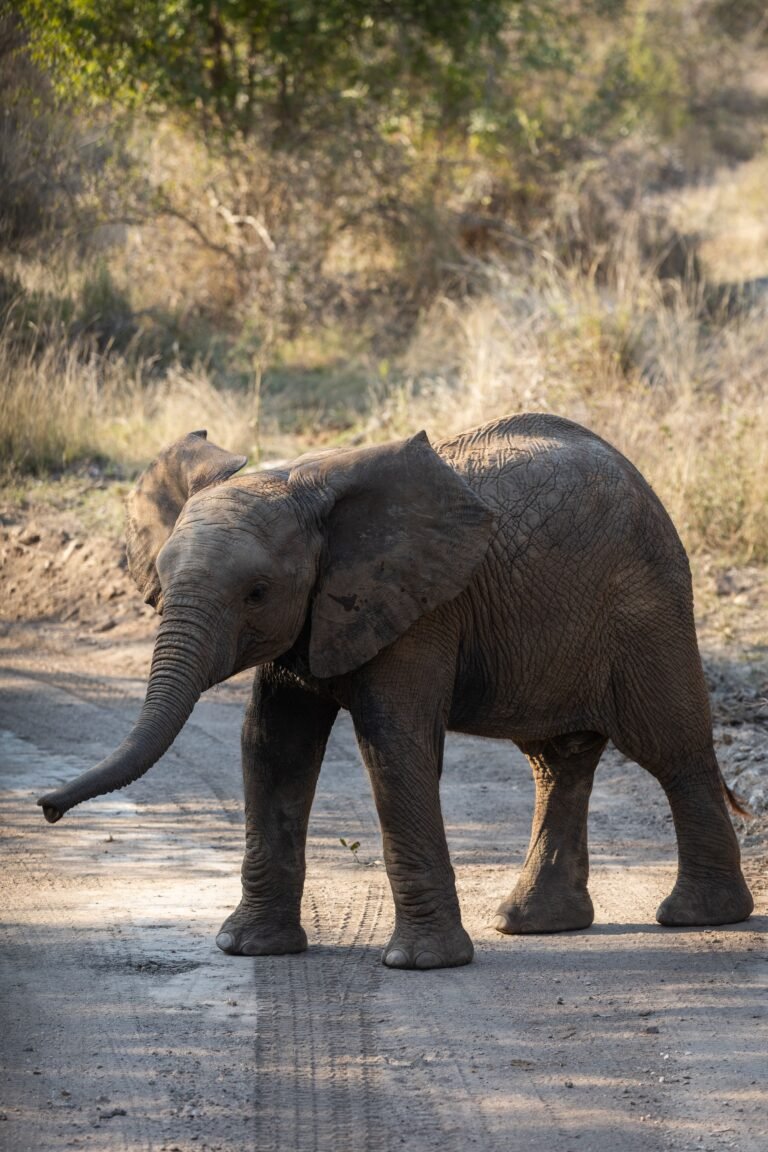
Elephant are everywhere in Kruger in impressive numbers. The park holds one of the continent’s largest elephant populations. Large breeding herds are regularly encountered on roads throughout the south and central regions. Give elephants space and never block their path.
Buffalo move in large herds, particularly in the south and central grasslands. Old bulls are often found alone or in small groups near waterholes. Buffalo are dangerous and should be treated with respect even from inside a vehicle.
Rhino are present in reasonable numbers but require more focus to find. White rhino, the larger and more common of the two species, are regularly seen in the south, particularly around Berg en Dal and the Malelane area. Black rhino are present but elusive and more commonly encountered in the private reserves.
Beyond the Big Five
Kruger’s wildlife extends far beyond the five most talked-about species. Cheetah, wild dog, hyena, giraffe, zebra, hippo, crocodile, and over 100 other mammal species are present. The central grasslands around Satara and Tshokwane are the best areas for cheetah sightings. Wild dog are most reliably encountered in the south and central regions, though they range widely.
The birdlife is extraordinary. Birdwatching in the north is phenomenal, with Pel’s fishing owl, carmine bee-eaters, and hornbills among the highlights. The waterbirds around Sunset Dam near Lower Sabie are outstanding.
When To Visit Kruger: A Season-by-Season Guide
Dry Season: May to September (Best for Wildlife Viewing)
The dry winter months are consistently the best time for wildlife viewing in Kruger. Vegetation thins and retreats as rainfall stops. Animals concentrate around the few permanent water sources that remain. Sighting distances increase dramatically as the bush opens up.
Summer months bring lush vegetation, migrant birds, and newborn animals, while the dry winter season concentrates wildlife around water sources, improving visibility.
June, July, and August are peak months with the clearest skies, coolest temperatures, and best sighting conditions. Mornings can be very cold in July and August, dropping below 10 degrees in the early hours. Layers are essential.
Peak season means higher accommodation prices and more visitors, particularly at the southern camps. Book SANParks accommodation many months in advance for June to August.
Shoulder Season: April to May and September to October
These months offer an excellent balance. Wildlife viewing is strong, particularly as the dry season begins or continues. Temperatures are more pleasant than the extremes of winter cold or summer heat. Accommodation is easier to book and often cheaper than the June to August peak.
April to May is the beginning of the dry season transition, with green vegetation still present but animals increasingly concentrated around water. September to October brings warming temperatures and improving game viewing as dry conditions intensify before the rains.
Green Season: November to March
The summer rains transform Kruger into a lush, green landscape that looks completely different from the dry season park. Migratory birds arrive in enormous numbers. Newborn animals are everywhere in November and December, which brings predator activity close behind them.
The tradeoff is that the dense vegetation makes spotting more difficult, animals are dispersed across the landscape rather than concentrated at water, and some roads become inaccessible after heavy rains.
Green season also brings significantly lower accommodation rates, sometimes 30 to 40 percent below peak pricing. For birders and photographers who love the summer light and dramatic thunderstorm skies, this is the most beautiful time in the park.
December and January are the school holiday period. Families descend in large numbers and accommodation books out fast. If visiting in this period, book many months in advance.
Accommodation Inside Kruger: The Complete Rest Camp Guide
SANParks operates 21 rest camps inside Kruger, ranging from large main camps with full facilities to small, remote bushveld camps with limited infrastructure and a more intimate bush feel.
All SANParks accommodation inside Kruger is booked directly through the SANParks website at sanparks.org. Booking through any third-party platform adds fees you do not need to pay.
Main Rest Camps
Lower Sabie Rest Camp sits on the banks of the Sabie River in the southeastern section of the park and is the most consistently recommended camp for wildlife sightings. The view from the deck over the river is one of the best in Kruger. The surrounding area produces outstanding game viewing year-round, with the H4-1 road between Lower Sabie and Skukuza among the finest game drive routes in Africa.
Skukuza Rest Camp is the largest camp in the park and functions as Kruger’s operational headquarters. It has the most facilities of any camp, including a shop, restaurant, petrol station, ATM, car hire, and a golf course where animals wander across the fairways. The sheer size means it can feel busy, but the surrounding game viewing is excellent and the Sabie River access makes up for the bustle.
Satara Rest Camp in the central region is the go-to base for visitors who prioritise lion sightings. The open plains surrounding Satara are prime predator country and the camp has a reliable, well-run atmosphere with good self-catering facilities.
Olifants Rest Camp perches dramatically on a cliff above the Olifants River in the central north with one of the most spectacular views of any camp in Africa. The river below regularly attracts elephant, hippo, crocodile, and a remarkable diversity of birds. The game drives in this area are excellent and the camp itself feels properly wild.
Letaba Rest Camp in the north is a favourite among birders and elephant enthusiasts, shaded by tall trees on the banks of the Letaba River. Letaba is home to the Elephant Hall, a small museum dedicated to the park’s legendary tuskers — iconic elephants remembered for their impressive tusks. Game drives around Letaba often yield sightings of large elephant herds, waterbuck, hippos, and crocodiles.
Shingwedzi Rest Camp sits in the remote north and is the base for exploring the northern mopane woodland. Quieter, more remote, and significantly less visited than the southern camps. For repeat visitors who want to escape the crowd entirely, Shingwedzi delivers.
Punda Maria Rest Camp in the far north is the starting point for the extraordinary Pafuri region near the Zimbabwe border. Ancient baobab trees, the Luvuvhu River fever tree forest, and an atmosphere that feels genuinely unlike the rest of Kruger make this area special for anyone willing to make the journey.
Berg en Dal Rest Camp in the southwestern corner offers a mountain character unlike the rest of southern Kruger, with good white rhino sightings and a scenic dam walk that is one of the best short walks in the park.
Crocodile Bridge Rest Camp is the closest camp to Johannesburg, making it ideal for a long weekend trip. Small and intimate, with the Crocodile River right on the fence and consistently good wildlife nearby.
Bushveld Camps
Kruger’s bushveld camps are smaller, more remote versions of the main camps with no day visitors permitted, fewer facilities, and a considerably more private atmosphere. They are among the best-value overnight options in the park for travellers who want a more exclusive feel without the cost of private reserves.
Bateleur Bushveld Camp in the north is a favourite among regulars. Small, remote, and beautifully positioned above a seasonal river. Game drives in the surrounding area are productive and the sense of isolation is genuine.
Sirheni Bushveld Camp in the far north is one of the most remote camps in all of Kruger, with a dam that attracts exceptional birdlife and a wilderness atmosphere that is unmatched at this price point.
Talamati Bushveld Camp near the Orpen Gate in the central region sits beside a beautiful waterhole that produces excellent wildlife sightings directly from the camp.
How To Get To Kruger National Park
From Johannesburg by Road
Most South African visitors drive. The journey from Johannesburg to the southern gates takes four to five hours on the N4 highway through Mpumalanga. The N4 east through Nelspruit/Mbombela is the main route, with exits to each of the southern gates well-signposted.
If you’re not in a rush, you could stop at scenic spots along the way or do an overnight stop such as at Graskop to see the stunning Three Rondavels. The Panorama Route through Mpumalanga passes Blyde River Canyon, God’s Window, and Bourke’s Luck Potholes, and makes an exceptional two-day drive before entering the park.
By Air
Three airports serve Kruger:
Kruger Mpumalanga International Airport (KMIA) near Nelspruit is the main domestic gateway, about one hour from the southern gates. Flights from Johannesburg’s OR Tambo International take under an hour.
Skukuza Airport sits inside the park itself, the only commercial airport within a major South African game reserve. Several private safari lodges arrange direct transfers from Skukuza.
Hoedspruit Airport serves the northern private reserves and is the access point for Timbavati, Klaserie, and the Limpopo Valley Airfield used by many upmarket lodges.
There are three ways to travel to Kruger: fly to Johannesburg and then drive for about four hours to the park; take an internal aircraft from Johannesburg to Kruger Mpumalanga International Airport and then drive for an hour; or take an internal flight from Johannesburg directly into Skukuza Airport.
Car Hire
A rental car is the best and most flexible way to explore Kruger independently. Book through a reputable company at either Johannesburg or KMIA. International Driving Permits are not needed if your licence is in the Latin alphabet.
One of the best things about self-driving in Kruger is that you can easily do the trip in all kinds of cars. However, choosing a vehicle with higher ground clearance makes your safari experience much more comfortable and rewarding.
Practical Rules and Safari Etiquette
Kruger has clear rules that exist for both your safety and the wellbeing of the wildlife. These are not suggestions.
Stay in your vehicle at all times except at officially designated get-out points, camps, picnic sites, and hides. Wildlife is used to vehicles, which have an accepted silhouette, whereas a human shape signifies a predator, which will cause alarm in prey species and danger from predators.
Speed limits apply and matter. The speed limit in Kruger is 50km/h on tarred roads and 40km/h on gravel roads. Speeds of around 20 to 30km/h give your eyes more time to look for wildlife and pick up on an unfolding scene you might miss at higher speeds.
Do not feed animals. This is illegal and harmful. It disrupts natural behaviour and can result in animals being put down if they become habituated to human food.
At sightings, be considerate. The most enjoyable sightings are those where drivers are calm, leave space, and do not try to force themselves into every opening. If traffic builds, it is better to pause, wait, or move on rather than turn the sighting into a jam.
Gate times are non-negotiable. Be at your exit gate before closing time. Arriving late incurs a penalty fee and requires advance arrangement with the camp.
All gates are cashless. Payments can only be made with a credit card. One transaction per vehicle saves time at the gate.
No alcohol in public areas. Alcohol is permitted only in accommodation units. No open alcohol is allowed in public areas or vehicles.
What To Pack for Kruger: The Practical List
For self-drive visitors:
Binoculars are essential, not optional. Good binoculars transform your experience of Kruger. A wildlife field guide to southern African mammals. A southern African bird guide if birding interests you. Sunscreen and a hat. Neutral-coloured clothing in khaki, olive, or brown. Bright colours are unnecessary and can disturb wildlife. Warm layers for early mornings in winter months. Water and snacks for long drives, since picnic sites can be far apart. A power bank for cameras and phones. Detailed maps of the park are available at rest camp reception desks and are well worth having as a supplement to your phone GPS.
Documents to carry:
Your identity document or passport. Your SANParks booking confirmation. Your credit card for gate fees.
A Sample Itinerary: 5 Days in Kruger
Day 1: Arrive through Crocodile Bridge Gate in the late afternoon. Check in at Crocodile Bridge Rest Camp. Sunset drive along the river.
Day 2: Full day based at Lower Sabie. Morning drive on H4-1 toward Skukuza. Midday at Nkuhlu Picnic Site on the river. Afternoon drive along the Sabie River toward Sunset Dam.
Day 3: Drive north from Lower Sabie toward Tshokwane on the H10 Lebombo road, stopping at Mlondozi Dam and Nkumbe Hill for views. Lunch at Tshokwane. Afternoon drive toward Satara.
Day 4: Full day based at Satara. Early morning drive on the H1-3 toward Skukuza for lion country. Midday at Satara waterhole. Afternoon drive on the open plains toward Orpen.
Day 5: Morning drive before exiting through Orpen Gate or returning south to exit via Paul Kruger Gate.
Faq
What is Kruger National Park famous for?
Kruger is one of Africa’s most celebrated safari destinations, known for the Big Five, exceptional wildlife diversity across 20,000 square kilometres, and world-class self-drive infrastructure that makes it accessible to an enormous range of travellers and budgets.
How many days do you need in Kruger National Park?
A minimum of two nights gives you a genuine taste of the park. Three to four nights in the south is the sweet spot for most first-time visitors. A week gives you enough time to explore both the south and central regions properly. If you want to include the north, plan for at least seven to ten days or focus a dedicated trip on the northern section.
What is the best time of year to visit Kruger?
June to September is the best for wildlife viewing. Animals concentrate around water sources, vegetation thins, and sighting distances increase. July and August are peak months. April to May and September to October offer a good balance of strong sightings and lower prices. November to March is the green season with lower rates but denser vegetation.
Can you do Kruger as a day trip from Johannesburg?
Technically yes, but it is not recommended. The drive is four to five hours each way, leaving minimal time inside the park. Two nights at minimum is a far better investment of time
What is the difference between Kruger and the Greater Kruger private reserves?
Kruger National Park is the public park where self-drive is the primary experience. The Greater Kruger private reserves — including Sabi Sands, Timbavati, and Manyeleti — share open unfenced boundaries with Kruger but offer a private, fully guided experience with off-road driving, night drives, and expert trackers. Wildlife is the same ecosystem. The experience is completely different. Both are excellent; which suits you depends on your budget and travel style.
Written by Tina. I founded 54TravelVibes to build the Africa travel guides I always wished existed. 54TravelVibes covers 54 iconic African destinations across South Africa, Kenya, Tanzania, and Morocco. Explore all destinations →