Stone Town, Zanzibar: where it is and who it suits
Stone Town occupies the historic western waterfront of Zanzibar City on Unguja, the island most visitors mean when they say Zanzibar. UNESCO inscribed it in 2000 for its Swahili trading-town heritage and the interactions reflected in its buildings and streets. This is a living neighborhood with homes, worship, commerce and tourism sharing the same lanes.
It suits travelers interested in carved doors, Indian Ocean trade, food and the island’s history. It also works well at the beginning or end of a beach trip because the airport and passenger ferry are nearby. A beach-only itinerary misses this part of Zanzibar; an island holiday spent entirely here misses the coasts.
The waterfront around Shangani and Forodhani is convenient for a first visit. Kiponda and the inner lanes bring you closer to markets and traditional merchant houses. Malindi, toward the ferry, is useful for a boat arrival but has more port-related movement.
Getting there from the airport or mainland
From Abeid Amani Karume International Airport, take a taxi or private transfer to Stone Town. The journey is about 8 km, or 5 miles, and normally takes 15-30 minutes depending on traffic and the final drop-off. Some hotels stand inside lanes inaccessible to cars, so the last part is on foot.
From Dar es Salaam, fast passenger ferries arrive at the terminal on Stone Town’s northeastern waterfront, near Malindi. The crossing is roughly 2 hours; terminal procedures add time at both ends. This is a point-to-point journey between Dar es Salaam’s ferry port and Zanzibar’s passenger port, not a hotel-to-hotel transfer.
As of November 2026, Azam Marine’s published nonresident adult fares are US$35 in economy, US$40 in business, US$60 in VIP and US$100 in Royal, one way. The published baggage allowance is 25 kg per person. Buy through the carrier, and keep the ferry separate from a tightly timed international flight connection.
Once you arrive, walk if you have light luggage and a nearby hotel. Otherwise use a road transfer to the closest accessible point. A modest distance can feel longer with bags, stairs, sun and uneven paving.
A walking route through the main sights
Start with Darajani while market activity is central to the morning, continue to the cathedral and former slave market, then cross the lanes to Shangani. Finish along the waterfront with the Old Fort, House of Wonders exterior and Forodhani after sunset. The order avoids repeated trips between the eastern market edge and western seafront.
The longer cross-town legs have approximate distances below; the adjacent waterfront stops work as one cluster. The exact lane and entrance affect your route. Visit durations are suggested allowances. Allow extra time for heat, stops and the narrow lanes, and keep the evening market separate from the morning walk.
| Stop | What it is | Suggested time | Next walking leg |
|---|---|---|---|
| Darajani Market | Food, produce and everyday shopping on the eastern edge | 30-45 minutes, morning | Cathedral: less than 5 minutes south; turnoff about 150 m / 490 feet south of the market |
| Anglican Cathedral and former slave market | Active Christ Church cathedral, memorial and slavery heritage interpretation | 60-90 minutes | Mercury House: about 700 m / 0.4 mile, 10-15 minutes |
| Mercury House | Freddie Mercury childhood-home museum on Shangani Street | 30-45 minutes | Old Fort: about 300 m / 0.2 mile, 5 minutes |
| Old Fort | Omani-era stone fort with courtyards and cultural uses | 20-30 minutes | House of Wonders: neighboring waterfront building; allow a short exterior stroll |
| House of Wonders | Former ceremonial palace undergoing rehabilitation | 10 minutes outside | Forodhani: directly opposite the waterfront landmarks |
| Forodhani Gardens | Seafront public gardens and evening food market | 45-60 minutes, evening | Ferry terminal: north along the Mizingani waterfront; allow extra time with luggage |
This is a full-day sequence with lunch and a rest break, not a continuous walk of the combined visit times. The morning and evening stops serve different purposes. Return to your hotel during the hottest part of the day if you prefer a slower pace.
Darajani Market and the inner lanes
Darajani is a working market where you see produce, spices, fish and everyday commerce. Go in the morning for its clearest role in the day’s routine. It is more useful for understanding food and local shopping than for seeking a polished souvenir experience.
Walk from the market edge into the old lanes rather than trying to explore them by car. Carved wooden doors, shaded passages and courtyard buildings are part of the town’s architectural character. A guide can explain their context, but doorways and homes remain private spaces.
For a first visit, the market-to-cathedral leg makes a manageable introduction. Keep photography considerate, especially around people working or shopping. A market visit is not an invitation to photograph someone closely without permission.
The Anglican Cathedral and former slave market
Christ Church stands at the site of the former slave market, which closed in 1873. The visit combines an active cathedral with memorial and heritage interpretation about enslavement and its legacy. The World Monuments Fund’s cathedral project explains the conservation and remembrance work behind the site.
Give the exhibition and memorial room in your schedule before entering the cathedral itself. The subject warrants more than a brief stop between shopping and lunch. With children, the difficult history is easier to approach when they know what they are about to see.
The cathedral is still a place of worship. Religious services can take precedence over sightseeing, and modest clothing is appropriate. Keep your voice low and leave space for worshippers rather than treating the interior as an exhibition room.
The closure of the market did not end every form of enslavement on the island. The memorial and interpretation help separate the history of the site from a simple celebration of abolition. Give the subject room in your schedule before returning to the commercial streets outside.
Mercury House on Shangani Street
Freddie Mercury was born Farrokh Bulsara in Zanzibar on September 5, 1946. Mercury House is the visitor landmark associated with his Zanzibar childhood, commonly described as his birthplace. Treat it as a childhood-home museum rather than proof of the exact room or building where he was born. Visit for the exhibition connecting Zanzibar with his later life, without expecting every domestic detail to survive as a period reconstruction.
As of November 2026, the museum’s visitor page gives daily hours of 9 a.m.-8 p.m. and admission of US$8 for adults and US$6 for children under 12. The Shangani Street address makes this an easy stop between lunch and the waterfront. Allow 30-45 minutes as a planning estimate.
The surrounding Shangani streets are also convenient for cafés and hotel restaurants. This makes Mercury House an indoor stop to place around the hotter part of your walk, rather than a reason to cross town repeatedly.
The Old Fort and House of Wonders
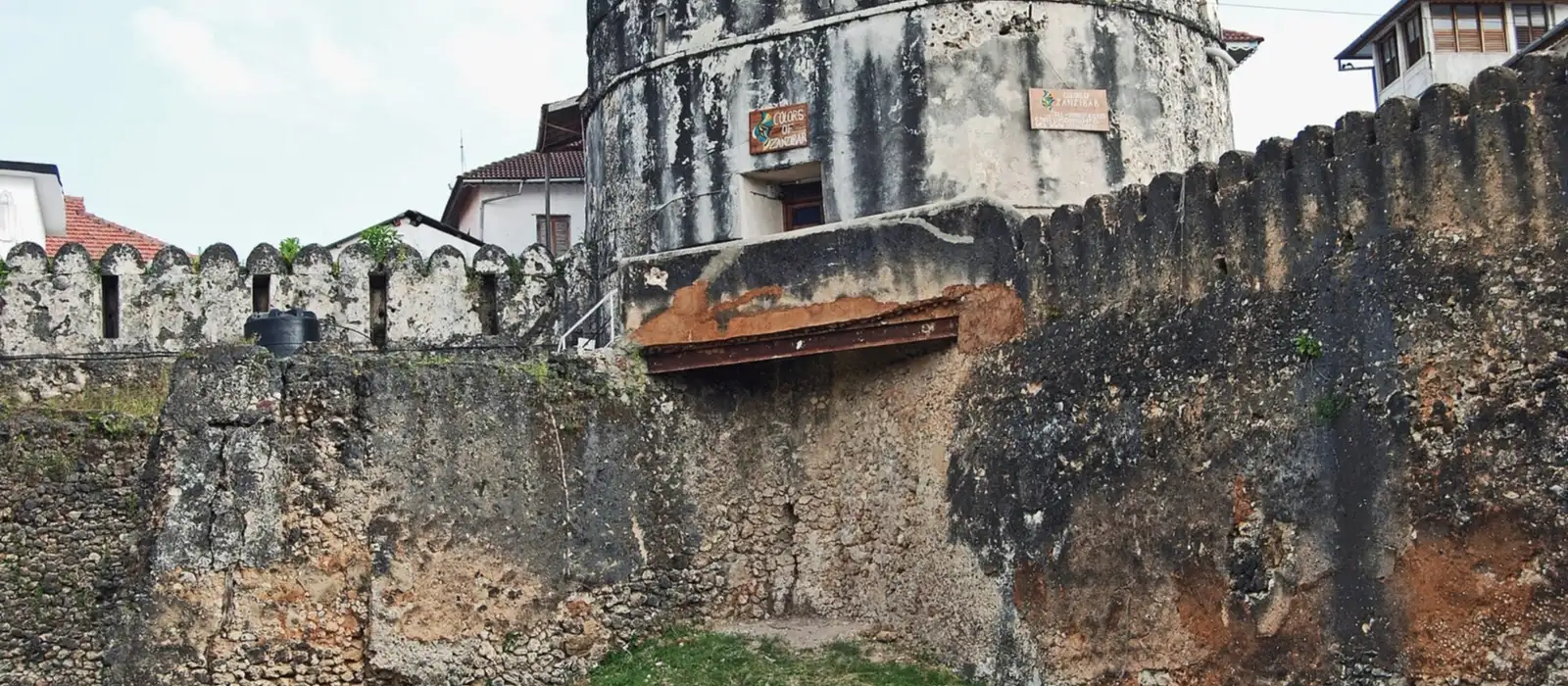
The Old Fort, also called Ngome Kongwe, is the heavy-walled Omani-era fort beside the waterfront. Its courtyards and cultural uses make it a useful short architectural stop. Visit the accessible spaces in the afternoon, then continue directly to the adjacent waterfront landmarks.
The House of Wonders, or Beit al-Ajaib, is a different building: a former ceremonial palace, not another part of the fort. It partially collapsed on December 25, 2020. Rehabilitation continues, so plan an exterior viewing from the public waterfront rather than an interior museum visit. The Old Fort also has conservation-related works; accessible areas can change, and the exterior remains the dependable part of this stop.
The two sites work together geographically but tell different stories. The fort reflects defensive power; the palace reflects the sultanate’s ceremonial presence. Their proximity is useful when heat or mobility limits how much ground you want to cover.
Forodhani Gardens after sunset
Forodhani is the public seafront garden opposite the fort and palace area. In the evening it becomes a food-market gathering place, with vendors selling items such as grilled skewers, sugarcane juice and Zanzibar pizza, a filled griddle-cooked snack. Go for a short browse before deciding what to eat.
The evening market is the reason an overnight stay improves a Stone Town visit. A daytime stop shows you the gardens and waterfront, but it does not reproduce the food-market experience. Allow 45-60 minutes as a starting point and use an established hotel restaurant if you prefer a seated dinner.
The waterfront also gives you a natural finish to the sightseeing route. Keep valuables close in crowds and use a reputable transfer for the return after dark; official advice recommends avoiding walking at night. The Zanzibar safety guide covers the broader risks.
Where to stay: waterfront or the inner town
Choose Shangani for seafront access and a convenient first visit, or the inner merchant-house streets for architecture and rooftop dining. Price labels below are broad comparisons, not official classifications. Staircases, internal room layouts and the distance from a vehicle drop-off matter more here than at a beach resort.
- Shoki Shoki Hotel - Shangani - Budget. The hotel offers private rooms on Shangani Street within the historic town.
- Nomad Hostel Stone Town - Baghani - Budget. Its Lebanon Brothers Square location offers dorm accommodation within the historic district.
- Tembo House Hotel - Shangani waterfront - Mid-range. Its seafront position gives easy access to Forodhani and the Old Fort.
- Emerson Spice - Kiponda - Mid-range. A restored merchant-house setting combines individually decorated rooms with rooftop and courtyard dining.
- Park Hyatt Zanzibar - Shangani waterfront - Luxury. The beachfront hotel places a pool and spa within walking reach of the main old-town sights.
- Zanzibar Serena Hotel - Shangani waterfront - Luxury. Its Swahili-style rooms provide a seafront base at the southwestern edge of the historic center.
Use the wider Zanzibar accommodation guide when combining town with the coast. In Stone Town, a central room can be worth more than a larger room that adds repeated road journeys. Room rates are left relative because date, category and board basis change the comparison.
For a dorm stay, compare the sleeping arrangement and shared facilities with a private room rather than price alone. For heritage accommodation, stairs and room position deserve similar attention. A rooftop restaurant does not establish that bedrooms, reception and street access are all on the same level.
When to go, costs and practical limits
June to October generally offers the easier weather for walking; January and February are hotter alternatives. The long rains around late March to May make a flexible indoor-outdoor schedule more useful. See Zanzibar’s monthly weather guide for the full comparison.
Sightseeing on foot keeps transport costs low once you are in town. Your main expenses are accommodation, meals, guided interpretation and paid museum visits. A rooftop meal and a waterfront luxury hotel belong to a different spending tier from a small private-room hotel and market snacks.
As of November 2026, official UK guidance calls for modest dress and warns of penalties for clothing considered inappropriate in public. Cover shoulders and knees in town; reserve swimwear for the beach or pool. Confirm the current government guidance before traveling.
Old-town surfaces, steps and narrow access points can limit mobility. A short geographic distance does not guarantee a step-free route. For a combined trip, the five-to-seven-day itinerary shows how to include Stone Town without turning every beach day into a long sightseeing transfer.
Frequently asked questions
Is Stone Town worth staying in?
Yes, particularly if history, markets and evening food are part of your trip. An overnight stay gives you the morning market and Forodhani after dark without a long return drive. It serves a different purpose from a beach resort.
How long do you need in Stone Town?
Allow one full day for the main sights and a second night if your arrival day is short. The cathedral and slavery heritage center deserve a dedicated visit rather than a quick photo stop. Add more time for rooftop dining, architecture and unhurried shopping.
Is the House of Wonders open?
The building remains under rehabilitation, with no verified museum reopening. Plan to see the waterfront location from outside. A museum visit should only be added after an official reopening announcement.
Where is Freddie Mercury's birthplace in Zanzibar?
Mercury House on Shangani Street is the visitor landmark commonly described as his birthplace. The museum presents it as a childhood home of Farrokh Bulsara, born in Zanzibar on September 5, 1946. Allow about 30-45 minutes for the exhibition rather than expecting a large museum.
Can you walk from the Zanzibar ferry terminal to the sights?
Yes, the terminal is on Stone Town's northeastern waterfront. Forodhani and the Old Fort are within walking reach, although heat and uneven surfaces make luggage cumbersome. A hotel transfer can use the nearest accessible road before a final walk through the lanes.
Sources
- UNESCO - Stone Town of Zanzibar whc.unesco.org
- UNESCO - Stone Town conservation decision 48 COM 7B.61, 2026 whc.unesco.org
- UNESCO - House of Wonders collapse and safeguarding whc.unesco.org
- Freddie Mercury Museum - Official museum freddiemercurymuseum.com
- Freddie Mercury Museum - Plan your visit freddiemercurymuseum.com
- World Monuments Fund - Zanzibar cathedral exhibition wmf.org
- Visit Zanzibar - Official tourism portal visitzanzibar.go.tz
- Stone Town in One Day - Geographic route and visit sequence zanzibarauthority.com
- Azam Marine - Ferry fares and travel terms azammarine.com
- Emerson Spice - Hotel and airport location emersonspice.com
- Tembo House Hotel - Accommodation and waterfront location tembohotel.com
- Shoki Shoki Hotel - Official hotel shokishokihotel.com
- Nomad Hostel Stone Town - Official accommodation nomadhostelstonetown.com
- SafariBookings - Cathedral location and nearby walking connections safaribookings.com
- SafariBookings - Mercury House and neighboring landmark distances safaribookings.com
- SafariBookings - Darajani location and walking connections safaribookings.com
- SafariBookings - Forodhani setting and neighboring landmarks safaribookings.com
- Park Hyatt Zanzibar - Official hotel hyatt.com
- Zanzibar Serena - Official hotel serenahotels.com
- Zuri Zanzibar - Climate and island location zurizanzibar.com
- UK FCDO - Tanzania safety and local customs gov.uk