
Cape Town Travel Guide: Top Attractions, Cape Town Hotels & How to Get There
This post contains affiliate links. If you book through them, I earn a small commission at no extra cost to you. Read my full disclosure.
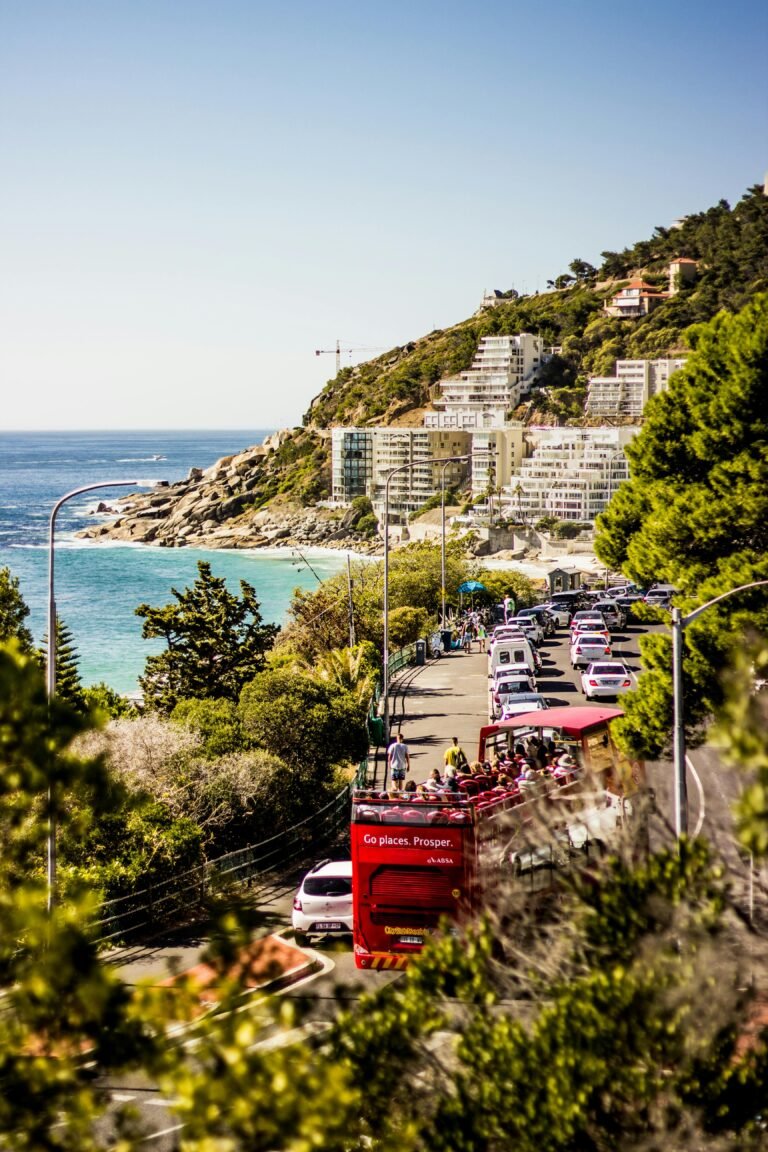
Cape Town sits at the southwestern tip of Africa with Table Mountain rising behind it, two oceans meeting at its feet, and one of the most dramatic city skylines on earth. It is the kind of place that makes first-time visitors go quiet when they arrive not from disappointment, but from the realisation that the photographs genuinely undersold it.
The Mother City, as Capetonians call it, packs an extraordinary density of world-class experiences into a compact area. You can hike Lion’s Head at sunrise, eat a Michelin-quality lunch at the V&A Waterfront, drive Chapman’s Peak in the afternoon, and watch the sun drop into the Atlantic from Camps Bay all in a single day. Most people need at least five days to do it justice. Most people wish they had booked seven.
This guide is part of our 14 Best Travel Destinations in South Africa series and our complete South Africa Travel Guide.
Not sure how to build your Cape Town itinerary or what to combine it with? Use the 54TravelVibes AI Trip Planner for a personalised South Africa route.
Cape Town City: Understanding the Mother City Before You Arrive
Cape Town is the legislative capital of South Africa and the country’s second-largest metropolitan area, with a population of approximately 4.6 million people. It sits on the Cape Peninsula a narrow finger of land that stretches south from the main African continent before ending at Cape Point, where the Atlantic and Indian Oceans meet.
The city is geographically organised around Table Mountain, which forms an extraordinary natural backdrop visible from almost every neighbourhood. The mountain divides the city into the Atlantic Seaboard (Camps Bay, Clifton, Sea Point, Green Point) on the west side and the City Bowl and southern suburbs (Gardens, Observatory, Newlands, Constantia) on the eastern side.
Cape Town is South Africa’s oldest city, founded in 1652 by Jan van Riebeeck of the Dutch East India Company as a waystation for ships rounding the Cape. The colonial history is visible everywhere in the Cape Dutch architecture of the Winelands, in the colour of the Bo-Kaap neighbourhood, in the history of slavery and displacement that shaped the entire region. Understanding Cape Town honestly means engaging with that history, not just photographing it.
The city also has a genuinely cosmopolitan food, arts, and culture scene that rivals any African city. Long Street, Woodstock’s gallery district, the neighbourhoods of Observatory and De Waterkant, and the evolving food markets of the city bowl make Cape Town an endlessly interesting urban destination independent of the natural landscape.
Cape Town is one of 14 destinations covered in our complete South Africa destination guide. If you are building a broader South Africa trip, read that first.
Read the 14 Best Travel Destinations in South Africa guide
Cape Town Attractions: The Top Things to See and Do
Cape Town’s attractions divide naturally into three categories: iconic natural landmarks, historical and cultural sites, and the neighbourhood experiences that make the city genuinely worth spending time in. Here are the ones worth planning your days around.
Table Mountain
One of the New Seven Natural Wonders of the World a 1,086-metre flat-topped mountain rising directly above the city centre. The cable car takes 5 minutes to the summit and delivers 360-degree views across the Cape Peninsula, both oceans, and the city below. On clear days you can see as far as the Helderberg mountains 60 kilometres away. Alternatively, the Platteklip Gorge hiking trail takes 2 to 3 hours and is free. Book cable car tickets online in advance walk-up queues in peak season can be 90 minutes.
Cost: Cable car: R450 per adult (2026, subject to change). Hiking: free. | Book a guided Table Mountain hike here
V&A Waterfront
The Victoria and Alfred Waterfront is Cape Town’s most visited single destination a working harbour surrounded by restaurants, shops, hotels, museums, and the clock tower that marks the original Alfred Basin. The Two Oceans Aquarium is here, the Zeitz Museum of Contemporary Art Africa (Zeitz MOCAA) the largest museum of contemporary African art in the world and the embarkation point for Robben Island ferries. Seals lounge on the harbour walls. The view of Table Mountain from the waterfront is one of the most photographed in Africa. Plan at least a full afternoon.
Cost: Free to visit the waterfront. Individual attractions charged separately. | Browse V&A Waterfront tours and activities
Robben Island
The island in Table Bay where Nelson Mandela was imprisoned for 18 of his 27 years in captivity. The prison tour is guided by former political prisoners people who were actually incarcerated here which gives the experience a weight and personal authenticity that no museum exhibit could replicate. The ferry departs from the V&A Waterfront. Total experience including the crossing takes approximately 4 to 4.5 hours. Book well in advance tickets sell out days and sometimes weeks ahead in peak season.
Cost: R950 per adult (2026, includes ferry and guided tour). | Book Robben Island ferry tickets in advance
Boulders Beach Penguin Colony
A colony of over 3,000 African penguins living on a protected beach near Simon’s Town, 40 kilometres south of Cape Town along the False Bay coast. Walking along the boardwalks at close range to penguins waddling, nesting, and swimming is one of South Africa’s most charming wildlife experiences. The beach itself is beautiful calm, warm Indian Ocean water sheltered by granite boulders. Allow 2 hours including the drive from Cape Town.
Cost: R240 per adult (2026, SANParks conservation fee). | Book a Cape Town to Boulders Beach guided tour
Chapman’s Peak Drive
A 9-kilometre coastal road carved into the cliff face of Chapman’s Peak between Hout Bay and Noordhoek widely regarded as one of the most scenic short drives in the world. The road hugs the mountain 600 metres above the Atlantic with 114 curves and views that justify stopping at every one of the provided lay-bys. Drive it in both directions if possible the scenery changes completely depending on which way you are heading and what the light is doing.
Cost: Small toll fee (approximately R55 per vehicle, 2026). | Book a Cape Peninsula full-day tour including Chapman’s Peak
Cape Point and Cape of Good Hope
The Cape of Good Hope is the most southwestern point of the African continent a dramatic headland of sea cliffs, pounding Atlantic surf, and fynbos-covered plateau that feels genuinely like the edge of the world. Cape Point, a kilometre east, has a lighthouse with extraordinary views from the top. The area is part of Table Mountain National Park and home to baboons, ostriches, bontebok, and eland. A full day from Cape Town, ideally combined with Boulders Beach and Chapman’s Peak.
Cost: R372 per adult (2026, Table Mountain National Park entry). | Book a Cape Point full-day tour from Cape Town
Bo-Kaap Neighbourhood
Cape Town’s most photographed neighbourhood a hillside of brightly coloured houses in coral, yellow, cobalt, and mint just above the city centre, with a history rooted in the Cape Malay community that formed from freed slaves and political exiles during the colonial era. The Bo-Kaap Museum tells the story of the community. The neighbourhood is best explored early morning before tour groups arrive. Numerous cooking classes teaching Cape Malay cuisine bobotie, koeksisters, samoosas run from local homes.
Cost: Free to visit the neighbourhood. Museum: small entry fee. | Book a Bo-Kaap walking tour and Cape Malay cooking class
Lion’s Head Hike
A 5-kilometre circular hiking trail to the 669-metre summit of Lion’s Head the distinctive conical peak between Table Mountain and Signal Hill. The trail includes chain ladders and metal rungs in the steeper sections and takes 2 to 3 hours for the circuit. The sunrise hike setting off from Signal Hill Road at 5am is one of Cape Town’s most beloved experiences. The city below is still dark, the mountain is catching the first light, and you share the summit with a small group of people who also set their alarms. Go on a full moon if the timing works.
Cost: Free no permit required. | Book a guided Lion’s Head sunrise hike
Kirstenbosch National Botanical Garden
One of the great botanical gardens of the world, located on the eastern slopes of Table Mountain above the southern suburbs. 528 hectares of indigenous South African flora fynbos, cycads, proteas, and rare endemic species with the Boomslang canopy walkway arching through the tree canopy above the gardens. The summer sunset concerts (November to April) transform the garden into a shared outdoor musical experience that feels unmistakably Cape Town. Entry in the evening is reduced after the concert starts.
Cost: R260 per adult (2026). Concerts: separate ticket. | Browse Kirstenbosch tours and sunset concert tickets
Trying to figure out which attractions to prioritise across 3, 5, or 7 days? The itinerary section below maps them by day.
Cape Town V&A Waterfront: What to Do, Where to Eat and How Long to Spend
The Victoria and Alfred Waterfront deserves its own section because most visitors underestimate how much is here. It is not just a shopping centre with a view it is a full half-day or evening destination.
Must-see at the V&A Waterfront
- Zeitz MOCAA The Zeitz Museum of Contemporary Art Africa occupies the former grain silo at the waterfront’s Clock Tower precinct. The building is extraordinary artist Thomas Heatherwick carved exhibition spaces out of the silo’s cylindrical chambers, creating curved, organic galleries unlike any conventional museum. The collection of contemporary African art is the finest on the continent.
- Two Oceans Aquarium One of the world’s finest aquariums, with a focus on the marine life of the Atlantic and Indian Oceans that meet at the Cape. The kelp forest exhibit and the predator exhibit (ragged-tooth sharks, rays, and turtles) are the highlights. Excellent for families with children.
- Robben Island ferries Depart from the Clock Tower precinct. Book well in advance, especially December to February.
- Harbour seals Hauled out on the harbour walls and pontoons throughout the day. Free, always there, genuinely entertaining.
- Sunset from the waterfront The view of Table Mountain from the waterfront as the sun drops behind it silhouetting the mountain against an orange sky reflected in the harbour water is one of Cape Town’s great visual moments. Get there 30 minutes before sunset and find a waterfront bench.
Where to eat at the V&A Waterfront
The waterfront has over 80 restaurants, which makes choosing difficult. For the best value, skip the main promenade restaurants and look instead at the market halls. The V&A Food Market (open Friday to Sunday) has outstanding local food vendors at better prices than the sit-down restaurants. Bascule Whisky Bar in the Cape Grace hotel has the largest whisky selection in the Southern Hemisphere and one of the best waterfront views in Cape Town.
Cape Town Hotels: Where to Stay for Every Budget
Where you stay in Cape Town makes a larger difference to the experience than in most cities — the neighbourhoods are distinct, traffic can be slow, and the Atlantic Seaboard and City Bowl have very different characters. Choose your base based on what you prioritise: beach access, walking distance to the city, proximity to the cable car, or quieter residential feel.
Hotel / accommodation | Area | Price/night | Why it works |
One&Only Cape Town | V&A Waterfront | R15,000–R35,000 | The finest address in Cape Town. Marina-facing rooms, exceptional spa, and Table Mountain as your backdrop. |
Cape Grace Hotel | V&A Waterfront | R8,000–R18,000 | Elegant, understated, and beautifully positioned at the V&A. Bascule Whisky Bar is one of the best in Africa. |
The Silo Hotel | V&A Waterfront | R12,000–R28,000 | Occupies the upper floors of the historic grain silo above Zeitz MOCAA. The most architecturally extraordinary hotel in Cape Town. |
Ellerman House | Bantry Bay | R20,000–R40,000 | Private villa-style luxury above the Atlantic. One of Africa’s finest small hotels. Extraordinary art collection. |
POD Camps Bay | Camps Bay | R6,000–R15,000 | Modern boutique hotel with Atlantic views and direct access to the Camps Bay beach strip. Best mid-luxury on the seaboard. |
The Marly Boutique Hotel | Camps Bay | R5,000–R12,000 | Stylish rooms above Camps Bay with mountain and ocean views. The pool terrace is excellent for sundowners. |
Daddy Long Legs | City Bowl | R1,200–R2,800 | Artist-decorated boutique hotel on Long Street. Each room is a different artwork. Excellent city centre location. |
Ashanti Lodge | Gardens | R500–R1,200 | Cape Town’s most established backpacker hostel. Pool, great social atmosphere, well-located for city access. |
The Backpack | De Waterkant | R450–R900 | Award-winning backpacker hostel, excellent facilities, genuinely helpful staff, good security. |
Search and compare all Cape Town hotels with real guest reviews and live pricing: Browse Cape Town accommodation here.
Book 2 to 3 months ahead for December and January the best Cape Town hotels sell out fast in summer and prices peak significantly around Christmas and New Year.
Cape Town Gordon’s Bay and the Best Day Trips from the Mother City
Cape Town’s position at the tip of the Cape Peninsula puts it within easy reach of some of the finest day trip destinations in South Africa. Gordon’s Bay is one of several excellent options within 90 minutes of the city.
Gordon’s Bay
Gordon’s Bay is a small harbour town on the eastern shore of False Bay, about 50 kilometres from Cape Town along the N2 highway. It is one of the Western Cape’s most underrated coastal destinations a working fishing harbour with excellent seafood restaurants, a sheltered beach with calm, warmer water than the Atlantic side of the peninsula, and the dramatic Hottentots Holland Mountains rising directly behind the town.
The drive from Cape Town to Gordon’s Bay along the R44 coastal road particularly the section through Strand and Somerset West is one of the most scenic short drives in the Western Cape, with the Helderberg mountains on one side and False Bay opening to the right. Gordon’s Bay is a genuinely pleasant half-day or full-day excursion that most tourists miss entirely.
Other top day trips from Cape Town
- Stellenbosch Wine Estates (45 minutes): South Africa’s wine capital, Cape Dutch architecture, and 150+ wine farms. A full day activity on its own. Read our complete Stellenbosch travel guidefor the planning detail.
- Hermanus whale watching (90 minutes): The world’s best land-based whale watching from June to November. Southern right whales gather in Walker Bay in extraordinary numbers. No boat required walk the cliff path and watch.
- Cape Point and Cape of Good Hope (1.5 hours): Already covered in the attractions section the full Cape Peninsula loop (Cape Point + Boulders Beach + Chapman’s Peak) makes a perfect full-day circuit.
- Franschhoek (1 hour): South Africa’s culinary capital 75 kilometres from Cape Town. The Franschhoek Wine Tram and the concentration of fine-dining restaurants on a single main street make it an excellent full-day food and wine excursion.
- Shark cage diving at Gansbaai (2 hours): The waters off Gansbaai harbour one of the highest concentrations of great white sharks in the world. Cage diving is a significant wildlife experience. Book a shark cage diving experience here.
Cape Town Flights From Johannesburg and How to Get to the Mother City
Cape Town flights from Johannesburg
The Johannesburg to Cape Town route (OR Tambo to Cape Town International, CPT) is one of the busiest domestic routes in Africa. Multiple airlines operate it throughout the day — FlySafair, Kulula, Mango, SAA, and CemAir all run regular services. The flight takes approximately 2 hours. Fares range from around R800 to R2,500 depending on how far in advance you book and which airline you choose. FlySafair consistently offers the best value on this route.
Cape Town to Johannesburg flight options are identical in reverse. If you are doing a Cape Town and Kruger circuit, flying into one city and out of the other is the most efficient approach. Compare and book Cape Town to Johannesburg flights here.
International flights to Cape Town
Cape Town International Airport receives direct flights from London (British Airways, Virgin), Amsterdam (KLM), Frankfurt (Lufthansa), Dubai (Emirates and Flydubai), Addis Ababa (Ethiopian Airlines), Doha (Qatar Airways), and multiple African hubs. Booking 60 to 90 days in advance typically saves 20 to 30% versus last-minute fares. Compare international flights to Cape Town here.
Getting around Cape Town
- Uber: Safe, reliable, and well-priced across the main tourist areas. The most practical transport option for most visitors. Download the app before you land.
- MyCiTi bus: Cape Town’s bus rapid transit system covers the main tourist corridors including the airport, V&A Waterfront, Sea Point, and Camps Bay. Clean, affordable, and reliable.
- Car hire: The best option for day trips to Chapman’s Peak, Stellenbosch, Hermanus, and the Cape Peninsula. Not necessary for city-only stays. Compare car hire from Cape Town here.
Getting a South Africa eSIM
Mobile coverage is excellent in Cape Town and across the Western Cape. A South Africa eSIM gives you data without roaming charges from the moment you land. Get your South Africa eSIM here.
Best Time to Visit Cape Town: Season by Season
November to February Summer (peak season)
Cape Town’s summer is warm, dry, and spectacular long days, clear skies, beach weather, and the city at its most vibrant. The cable car runs regularly, outdoor dining is at its best, and the Kirstenbosch sunset concerts make summer evenings genuinely special. Temperatures average 26 to 30°C. This is also the busiest and most expensive period — accommodation books out months ahead, particularly December and January. Book everything early.
March to May Autumn (recommended)
The crowds thin from March, prices drop, and the weather remains excellent warm (22 to 26°C), mostly dry, with the occasional dramatic autumn storm that does extraordinary things to the light. April and May see the first southerly rains arrive, but days are still largely clear and outdoor activities continue unaffected. The best month for combining Cape Town with the Winelands grape harvest is March.
June to August Winter
Cape Town’s Mediterranean climate means winter brings rain persistent, frontal, North Atlantic-style rain rather than tropical downpours. Temperatures drop to 12 to 18°C. The cable car closes during high winds and cloud. However, winter prices are dramatically lower, the city quieter, and the landscape of the Cape Peninsula after rain impossibly green, with waterfalls running off the mountain has its own extraordinary beauty. Whale watching at Hermanus begins in June.
September to October — Spring
The fynbos on Table Mountain and across the Cape Peninsula blooms in spring thousands of species of proteas, ericas, and restios carpeting the slopes in colour. Temperatures climb back to 20 to 25°C, cable car operation is reliable, and accommodation prices are still lower than summer. October is increasingly regarded as the best overall month to visit Cape Town good weather, lower prices, and the city at its most colourful.
Cape Town Itinerary: How to Spend 3, 5, or 7 Days
3 days in Cape Town the essentials
- Day 1: Table Mountain cable car or Lion’s Head morning hike. Lunch at the V&A Waterfront. Afternoon at Zeitz MOCAA. Sunset from Signal Hill.
- Day 2: Cape Peninsula full-day tour Boulders Beach penguins, Cape Point, Cape of Good Hope, Chapman’s Peak Drive. Book through a tour operator or self-drive.
- Day 3: Bo-Kaap morning walk. Robben Island ferry (book weeks ahead). Evening dinner in Camps Bay at sunset.
5 days in Cape Town
- Day 1: Table Mountain + V&A Waterfront + Zeitz MOCAA.
- Day 2: Cape Peninsula circuit Boulders Beach, Cape Point, Chapman’s Peak.
- Day 3: Robben Island + Bo-Kaap + Long Street evening.
- Day 4: Day trip to Stellenbosch wine estates, Dorp Street, estate lunch.
- Day 5: Kirstenbosch morning. Constantia winelands. Sunset at Camps Bay.
7 days in Cape Town
Add: Hermanus for whale watching (June to November) or shark cage diving at Gansbaai, a second winelands day in Franschhoek, a morning at the Oranjezicht City Farm Market (Saturday), and a sunset catamaran cruise from the V&A Waterfront. Seven days is when Cape Town stops feeling like a checklist and starts feeling like somewhere you actually know.
Is Cape Town Safe for Tourists? An Honest Answer
Cape Town has a genuine crime problem that is worth addressing honestly rather than either dismissing or catastrophising. The city has high rates of gang violence, carjacking, and petty crime but these are heavily concentrated in specific areas that are not on standard tourist itineraries.
The tourist-facing areas of Cape Town the V&A Waterfront, the City Bowl, Camps Bay, Sea Point, the southern suburbs, the Cape Peninsula are all frequently visited by international tourists and are not where the city’s crime statistics are generated. Walking around these areas during the day is safe. The V&A Waterfront has excellent security. Table Mountain and the Peninsula parks are safe during daylight hiking hours.
Practical precautions that apply across Cape Town:
- Use Uber rather than flagging street taxis, particularly at night
- Do not display expensive cameras, phones, or jewellery conspicuously
- Do not leave valuables visible in hire cars break-ins do happen at popular viewpoints
- Ask your accommodation for specific current advice on arrival conditions change and locals know them best
- Avoid walking alone in the CBD after dark, particularly on the edges of the central area
Practical Information for Visiting Cape Town South Africa
Travel insurance
Essential for South Africa. Make sure your policy covers adventure activities if you plan to hike, cage dive, or paraglide. Get a SafetyWing travel insurance quote for South Africa here.
Currency
South African Rand (ZAR). As of 2026, approximately R18 to R19 per USD$1. Cards are widely accepted everywhere including markets and small restaurants. ATMs are plentiful in tourist areas.
Language
English is universally spoken and all tourism-facing businesses operate comfortably in English. Cape Town is the most cosmopolitan city in South Africa in terms of languages spoken you will also hear Afrikaans, Xhosa, and multiple other languages on the streets, which is part of the city’s character.
How Cape Town Fits Into a Larger South Africa Trip
Cape Town is the natural bookend to most South Africa itineraries the city most visitors fly into or out of, and the one most want to spend the most time in. The two most common Cape Town combinations are:
- Cape Town + Kruger National Park the classic South Africa circuit. Fly into Johannesburg, go straight to Kruger for the safari, then fly down to Cape Town for the city and coast. Or reverse it. Both work logically.
- Cape Town + Stellenbosch + Garden Route the Western Cape circuit. Based in Cape Town, day trip to Stellenbosch, then self-drive east along the Garden Route to Knysna, Plettenberg Bay, and Tsitsikamma. End in Port Elizabeth.
For the full planning picture, read our complete South Africa Travel Guide and our 14 Best Travel Destinations in South Africa guide.
Frequently Asked Questions About Cape Town
How many days do you need in Cape Town?
Five days is the minimum to cover the main attractions without rushing. Seven days allows you to add Stellenbosch, Hermanus, or Franschhoek as day trips. Three days gives you the essentials Table Mountain, the Cape Peninsula, and Robben Island but leaves you wanting more.
What is the best time to visit Cape Town?
November to February for classic summer beach weather and the Kirstenbosch concerts. October for the best combination of good weather, lower prices, and spring fynbos blooms. June to August for dramatically lower prices and winter whale watching at Hermanus if you can handle occasional rain.
Is Cape Town the capital of South Africa?
Cape Town is the legislative capital of South Africa where the Parliament sits. South Africa has three capitals: Cape Town (legislative), Pretoria (executive, where the president’s offices are), and Bloemfontein (judicial, where the Supreme Court of Appeal sits). Johannesburg, the largest city, is not a capital.
What is Cape Town known for?
Table Mountain, Robben Island, the V&A Waterfront, the Cape Peninsula, Boulders Beach penguins, Chapman’s Peak Drive, the Cape Winelands, the Bo-Kaap neighbourhood, and one of Africa’s finest food scenes. It is consistently ranked as one of the world’s top travel destinations.
How far is Cape Town from Johannesburg?
Cape Town is approximately 1,400 kilometres from Johannesburg by road a 14 to 16 hour drive. Most visitors fly the direct flight takes about 2 hours. Several airlines operate this route with multiple daily departures.
Do I need a visa for South Africa?
Citizens of the UK, USA, EU, Canada, Australia, and New Zealand do not require a visa for South Africa for stays up to 90 days. Check current requirements for your specific nationality before booking.
Book Your Cape Town Trip Everything You Need
Flights to Cape Town: Compare and book cheap flights to Cape Town International
Flights from Johannesburg to Cape Town: Compare domestic Cape Town to Johannesburg flights
Cape Town hotels: Search all accommodation with real reviews and live pricing
Table Mountain and Lion’s Head tours: Book guided hikes and cable car tours
Robben Island tickets: Book Robben Island ferry tickets in advance
Cape Peninsula day tour: Book Boulders Beach, Cape Point and Chapman’s Peak
Cape Winelands tour: Book a guided Stellenbosch wine tour with transport
Car hire in Cape Town: Compare car hire — essential for day trips
Travel insurance: Get a SafetyWing quote for South Africa
South Africa eSIM: Data from landing — no roaming fees
Final Thoughts on Cape Town
Cape Town is one of those cities that sets an unfair standard. After you have stood on top of Table Mountain watching the cloud pour over the edge like a slow waterfall, after you have driven Chapman’s Peak at golden hour, after you have sat at the waterfront watching the mountain catch the last light most other cities feel slightly diminished by comparison.
It is not perfect. The inequality is visible, the traffic frustrates, and the weather makes its own plans. But Cape Town delivers on its reputation more consistently than almost any city in the world and for the traveller who approaches it with time and genuine curiosity, it gives back far more than it was asked for.
For more South Africa inspiration: read our 14 Best Travel Destinations in South Africa, our complete Stellenbosch travel guide, and our complete South Africa Travel Guide for the full trip planning picture.
Written by Tina Johannesburg-based travel writer, founder of 54TravelVibes.
54TravelVibes covers 54 iconic African destinations across South Africa, Kenya, Tanzania, and Morocco. Explore all destinations