
The Ultimate Durban Travel Guide (2026): Everything You Need To Know Before You Visit
This post contains affiliate links. If you click through and make a purchase or booking, I may earn a small commission at no extra cost to you. The price you pay is exactly the same either way. I only recommend products and experiences I would use myself.
Most people who have not been to Durban picture it as a stopover city. A place you pass through on the way to a safari or a flight connection.
That is one of the most persistent misconceptions in South African travel.
Durban is South Africa’s third largest city, home to 4.5 million people, the largest Indian population outside of the Indian subcontinent, one of the ten busiest ports in the world, and some of the finest beaches in Africa. It sits on the warm Indian Ocean with a subtropical climate that makes it genuinely enjoyable every month of the year. The food scene is extraordinary. The culture is layered and fascinating. And the wildlife reserves accessible within a two-hour drive put game experiences that would cost three times as much elsewhere within easy reach.
This is the complete guide to visiting Durban. Written for first-time visitors, families, couples, solo travellers, and anyone planning to use the city as a base for exploring KwaZulu-Natal.
Why Visit Durban? What Makes This City Worth Your Time
Durban is a vibrant modern city of 4.5 million people, the largest city Kwazulu Natal and the second largest in South Africa after Johannesburg. It stretches from the Umhlanga Rocks district in the north to the Aliwal Shoal in the south and stretches ten kilometres inland to the Valley of a Thousand Hills.
What makes Durban genuinely different from Cape Town and Johannesburg is the combination of things that exists nowhere else in South Africa. Warm Indian Ocean water swimmable year-round. A food culture shaped by Zulu, Indian, and British colonial influences that produces the kind of street food that becomes one of your strongest memories from a trip. Architecture that ranges from neo-Baroque civic buildings to art deco beachfront hotels to the golden-domed Jumma Musjid mosque. And surrounding countryside that offers the Drakensberg mountains, the KwaZulu-Natal Battlefields, and Hluhluwe-iMfolozi Park all within a day’s drive.
Durban suits every type of traveller. Families come for the beaches and uShaka Marine World. Surfers come for the consistent breaks along the Golden Mile. Food lovers come for the bunny chow. History enthusiasts come for the Battlefields and the Zulu cultural heritage. Wildlife travellers use it as a gateway to one of Africa’s most underrated safari destinations.
And compared to Cape Town particularly, Durban is significantly more affordable, which stretches a travel budget meaningfully further.
Why Visit Durban? What Makes This City Worth Your Time
Durban is a vibrant modern city of 4.5 million people, the largest city in KwaZulu-Natal and the second largest in South Africa after Johannesburg. It stretches from the Umhlanga Rocks district in the north to the Aliwal Shoal in the south and stretches ten kilometres inland to the Valley of a Thousand Hills.
What makes Durban genuinely different from Cape Town and Johannesburg is the combination of things that exists nowhere else in South Africa. Warm Indian Ocean water swimmable year-round. A food culture shaped by Zulu, Indian, and British colonial influences that produces the kind of street food that becomes one of your strongest memories from a trip. Architecture that ranges from neo-Baroque civic buildings to art deco beachfront hotels to the golden-domed Jumma Musjid mosque. And surrounding countryside that offers the Drakensberg mountains, the KwaZulu-Natal Battlefields, and Hluhluwe-iMfolozi Park all within a day’s drive.
Durban suits every type of traveller. Families come for the beaches and uShaka Marine World. Surfers come for the consistent breaks along the Golden Mile. Food lovers come for the bunny chow. History enthusiasts come for the Battlefields and the Zulu cultural heritage. Wildlife travellers use it as a gateway to one of Africa’s most underrated safari destinations.
And compared to Cape Town particularly, Durban is significantly more affordable, which stretches a travel budget meaningfully further.
Where Is Durban and How Do You Get There?
Durban sits on South Africa’s east coast in the KwaZulu-Natal province, facing the warm Indian Ocean. It is approximately 560 kilometres from Johannesburg, 1,270 kilometres from Cape Town, and 550 kilometres from Port Elizabeth.
Flying to Durban
Durban’s King Shaka International Airport serves the city and is one of the main arrival points for domestic and international travellers. Domestic flights from Johannesburg OR Tambo take approximately one hour and operate multiple times daily. Flights from Cape Town take around two hours. King Shaka Airport is located about 35 kilometres north of the city centre near La Mercy, and the drive into Durban takes approximately 30 to 40 minutes depending on traffic.
Driving to Durban
From Johannesburg, the drive to Durban along the N3 highway takes approximately five to six hours through the Drakensberg escarpment and into KwaZulu-Natal. The N3 is one of South Africa’s most scenic and well-maintained intercity routes, passing through the Midlands and past the spectacular Van Reenen’s Pass. It is a drive worth doing at least once.
From Cape Town, the drive along the N2 Garden Route takes approximately fourteen to sixteen hours and is best split across two days with a stop in Port Elizabeth or East London.
Car Hire
A rental car is the most practical way to get the most out of Durban and its surroundings. It gives you access to the beaches north and south of the city, the surrounding reserves, and the flexibility to explore KwaZulu-Natal’s countryside at your own pace. Compare car hire at King Shaka Airport before your trip to find the best rates for your travel dates.
Best Time To Visit Durban: A Season-by-Season Guide
Durban’s subtropical climate makes it genuinely enjoyable year-round, which is one of its great advantages over Cape Town’s winter rains or Johannesburg’s summer storms. That said, each season offers a meaningfully different experience.
Summer: December to February
Summer in Durban is hot, humid, and lively. Temperatures regularly reach 30 degrees and above, the beaches are busy with South African holiday-makers, and the city has an energetic, festive atmosphere. December and January are the school holiday peak with accommodation prices rising significantly and popular beaches becoming very crowded.
The tradeoff is humidity and the occasional heavy afternoon thunderstorm. If you visit in summer, plan beach time for the mornings and early afternoons before the heat and potential rain arrive later in the day.
Autumn: March to May
Autumn brings more comfortable temperatures in the mid-twenties, lower humidity than summer, and significantly fewer crowds as the school holiday rush ends. Accommodation prices drop from the December and January peaks. The sea remains warm from the summer months and swimming conditions are excellent.
This is one of the most underrated times to visit Durban. The city feels more local and less tourist-facing, the weather is pleasant without the summer extremes, and you get more of the city for less.
Winter: June to August
Winter is Durban’s best-kept secret and the season I recommend most consistently. Durban’s beaches offer public amenities, protective shark nets, and lifeguards on duty, with the subtropical weather providing sunshine virtually all year round, even in winter. Temperatures in winter sit comfortably between 17 and 24 degrees, making it perfect for beach walks, outdoor dining, and sightseeing without the summer heat.
Winter is also whale watching season along the KwaZulu-Natal coast. Humpback and southern right whales migrate north past Durban’s coastline between June and November, with sightings possible from the beaches and on dedicated whale-watching boat trips.
Accommodation prices in winter are the lowest of the year. The city is quieter, restaurants are easier to book, and Durban feels like a genuine place rather than a holiday destination performing for visitors. For most travellers, June through August is the sweet spot.
Spring: September to November
Spring brings warming temperatures and the return of energy to the beachfront before the full summer crowds arrive. Whale watching continues through October and November. The weather is increasingly warm and sunny, accommodation is still more affordable than December and January, and the beaches are less crowded than the summer peak.
Durban Weather at a Glance
| Season | Months | Average Temperature | Crowds | Accommodation Prices |
|---|---|---|---|---|
| ☀️ Summer | December – February | 26–32°C (79–90°F) | High | Peak |
| 🍂 Autumn | March – May | 22–27°C (72–81°F) | Low | Lower |
| ❄️ Winter | June – August | 17–24°C (63–75°F) | Low | Lowest |
| 🌿 Spring | September – November | 20–28°C (68–82°F) | Medium | Mid |
How To Get Around Durban
Uber and Bolt
Uber is the most reliable and recommended way to get around Durban for tourists. Ride-hailing services like Uber are widely used and generally safer than public transport, though always confirm your ride in the app before entering the vehicle. Uber operates throughout the city and to most of the major tourist areas including Umhlanga and the beachfront. Bolt operates as an alternative and is often slightly cheaper for shorter trips.
Car Hire
For anyone planning to explore beyond the city centre, including visits to Umhlanga, Ballito, the Valley of a Thousand Hills, or day trips to Hluhluwe-iMfolozi Park, a rental car is the most practical option. Roads are well-maintained and clearly signposted. Compare rental car rates before travel to secure the best pricing.
Public Transport
People Mover buses connect various points in the CBD to the beachfront and other popular locations. Minibus taxis are the most used mode of transport by locals but are very crowded. For tourists, Uber and private car hire are strongly preferable to public transport for safety and convenience reasons.
Best Areas To Stay in Durban
Where you stay in Durban shapes everything from your daily commute to the beach to the quality of your restaurant options. Here is an honest breakdown of each area.
Umhlanga: Best for Luxury and Upmarket Visitors
Umhlanga is the most sought-after address in the greater Durban area and the first choice for visitors who want upmarket accommodation, excellent restaurants, and a high-end beach experience without the busier city centre atmosphere.
Umhlanga, the buzzing residential, commercial and resort suburb in north Durban, developed originally from a nearby seaside town and its wide, sandy beaches are now lined with exclusive hotels and apartment blocks. The area is distinctive for its famous lighthouse while its Gateway Shopping Centre is one of the biggest shopping malls in the country.
The beach here is beautiful, the promenade is well-maintained, and the restaurant and café scene is one of the strongest in KwaZulu-Natal. Umhlanga is also close to King Shaka Airport, making it an ideal first-night or last-night base.
Best for: Luxury travellers, couples, business visitors, beach holidays with a high-end feel.
North Beach: Best for Families and Beachfront Access
North Beach is positioned right on Durban’s famous Golden Mile and is one of the most family-friendly areas of the beachfront. North Beach delivers stunning sunrises all year round and is blissfully warm. The area has good access to the promenade, surf schools, and the various beachfront attractions. Accommodation ranges from large beachfront hotels to mid-range options within easy walking distance of the water.
Best for: Families, beach-focused visitors, surfers, first-time visitors who want to be in the centre of the action.
Florida Road: Best for Nightlife and Restaurants
Florida Road in the Morningside suburb is Durban’s most vibrant dining and nightlife street. Lined with independent restaurants, cocktail bars, live music venues, and coffee shops, it has a creative, cosmopolitan energy that feels distinctly local rather than tourist-facing.
Florida Road is noteworthy for its cafes, and you can make a stop at top attractions like the African Art Centre while you’re in the area.
Staying in or near Florida Road puts you within walking distance of Durban’s best casual dining and bar scene. It is not a beachfront location but Uber to the beach takes under ten minutes.
Best for: Young travellers, foodies, couples, digital nomads, anyone who prioritises the restaurant and nightlife scene over direct beach access.
Ballito: Best for a Quiet Beach Holiday
About 45 kilometres north of Durban along the N2 coast road, Ballito has developed into a popular upmarket beach town with a relaxed, small-town atmosphere very different from the city centre. The beaches here are wider and less crowded than the Golden Mile, the suburb has excellent restaurants and coffee shops, and the pace of life is considerably slower.
Ballito suits visitors who want a genuine beach holiday without the noise and bustle of a large city. It is close enough to Durban for day trips but feels genuinely removed from urban life.
Best for: Families, couples, beach holiday seekers, visitors who want coastal KwaZulu-Natal without the city intensity.
Morningside: Best for Food Lovers
Morningside is the upmarket suburb that gives Florida Road its restaurant scene. A mix of residential streets, boutique guesthouses, and independent shops, it has a neighbourhood feel that regular visitors often prefer over the more obviously tourist-facing beachfront areas.
Best for: Repeat visitors, food lovers, travellers who want a local neighbourhood atmosphere.
Read more about Durban accomodation on Best Areas to Stay in Durban (2026 Guide): Safe, Stylish & Worth Every Rand
Top Things To Do in Durban
The Golden Mile
It’s called the golden “mile” but it’s actually almost four miles of beachfront in Durban. From Blue Lagoon South to Addington Beach and Durban Harbour, this boardwalk and its accompanying beachfront attracts walkers, joggers, surfers looking to catch a few cool waves and sunbathers craving those rays.
The Golden Mile is where Durban’s character reveals itself most clearly. Start with a sunrise walk from North Beach toward South Beach, stop for breakfast at one of the beachfront cafes, and watch the city come alive around you. The promenade has dedicated cycling and skating lanes, regular markets, and a series of outdoor fitness stations that locals use from dawn.
uShaka Marine World
uShaka Marine World’s 40 acres of water adventure is considered one of Durban’s best spots to visit. The aquarium has five different sections, designed around five creatively re-imagined shipwrecks. Come for the dolphin show but stay for the chance to scuba dive and explore these shipwrecks, view the fascinating creatures and take your chances atop the Wet ‘n’ Wild slide, the highest, most breathtaking water slide in the southern hemisphere.
uShaka is one of the finest marine parks in Africa and genuinely suits visitors of all ages. Allow a full day and book tickets in advance during school holidays.
Moses Mabhida Stadium
Built for the 2010 FIFA World Cup, Moses Mabhida Stadium is one of the most architecturally striking buildings in South Africa. The iconic arch spans the full length of the stadium and the SkyCar gondola ride to the top of the arch delivers panoramic views over Durban, the beachfront, and the Indian Ocean that are worth the trip alone. The Big Rush Big Swing, described as one of the highest stadium swings in the world, is attached to the arch for anyone who wants an adrenaline experience.
Victoria Street Market
The city’s distinctive Asian atmosphere is most evident in the bustling Victoria Market, first opened in the 1870s. Its exotic mix of saris, food and spices, incense and Indian music mixed with African curios are sold from more than 170 stalls with a fish market in the basement.
Victoria Street Market is one of the most atmospheric market experiences in South Africa. Arrive in the morning when the spice sellers are setting up and the fish market is at its most active. Bargaining is expected and welcome.
Durban Botanic Gardens
The Durban Botanic Gardens is the oldest botanical gardens in Africa, with an impressive collection of exotic plants and a peaceful setting for a relaxing stroll.
Entry is free and the gardens are an excellent morning option, particularly during the summer heat when the shade from the ancient trees makes the temperature manageable. The cycad collection here is one of the finest in the world.
Florida Road
More than a street. Florida Road is an afternoon and evening experience of its own. Walk the length of it, stop at whichever café or restaurant catches your attention, and stay for dinner. The concentration of quality independent restaurants here is exceptional by any South African city standard.
Suncoast Casino and Beach
Suncoast Beach offers an upscale atmosphere without losing Durban’s signature charm. This stretch of beach is attached to the glamorous Suncoast Casino and Entertainment World. The beachfront here is well-maintained, the restaurants are good, and the entertainment options make it a reliable evening destination even for non-gamblers.
Surfing on the Golden Mile
Durban has a serious surf culture and the breaks along the Golden Mile are among the most consistent in South Africa. Addington Beach, close to the harbour entrance at the southern end of Durban Bay, is more protected with smaller waves that lend itself to learning how to surf. Durban’s South Beach is a popular surf spot and is known as a safe place for beginner surfers. Several surf schools operate along the Golden Mile and offer lessons for all ability levels.
Harbour Cruises
Durban Harbour is one of the ten busiest ports in the world and a harbour cruise gives a perspective on the city that is impossible from land. Evening sunset cruises are the most popular option and several operators run from the Victoria Embankment.
Best Beaches in Durban
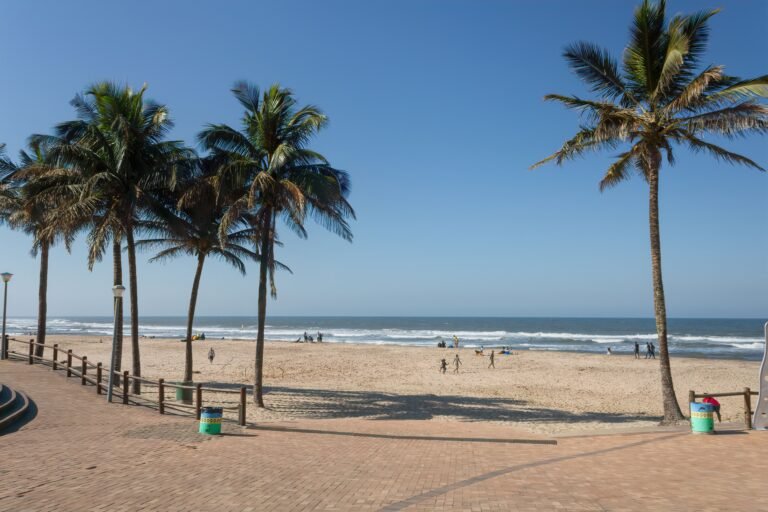
Durban boasts 600 kilometres of subtropical beaches on its coastline with fantastic weather all year round, even in winter. All of Durban’s beaches are shark-netted. That last detail matters more than it might seem. Swimming in Durban is genuinely safe within the netted, lifeguarded zones.
North Beach is the most iconic and most photographed beach on the Golden Mile. Wide, well-maintained, consistently good surf, and one of the finest sunrise views in KwaZulu-Natal. The promenade here is busy from early morning with joggers, cyclists, and families.
South Beach sits at the southern end of the Golden Mile adjacent to uShaka Marine World. South Beach is ideal for swimming, especially for children as it is protected from wind and waves by a breakwater. More sheltered and slightly calmer than North Beach, it is the better choice for families with young children.
Umhlanga Beach is the premium beach experience north of the city. Backed by luxury hotels and the famous Umhlanga Lighthouse, it has a polished, resort-town feel without the city bustle. About 15 minutes north of Durban, Umhlanga Rocks beach is lined with luxury hotels and apartments. This is a fun spot with a permanent holiday vibe.
Bronze Beach at Umhlanga is the quieter, more secluded alternative to the main Umhlanga beach. Worth seeking out if you want Umhlanga’s quality without the crowds.
Ballito is the cleanest and most relaxed of the main north coast beaches. The town has a strong community feel and the beaches are well-maintained with excellent facilities.
Umdloti and Salt Rock are the quieter alternatives further north up the KwaZulu-Natal coast. Sunshine, sand, rock pools and warm water typify the idyllic beach conditions at Umdloti, while Salt Rock and Zinkwazi, further north, are more family friendly.
Beach safety rules that always apply: Swim only between the flags in lifeguard-monitored zones. Avoid night swimming. Secure your belongings using beach lockers where available. Apply high SPF sunscreen even in winter as the KwaZulu-Natal sun is intense year-round.
Where To Eat in Durban: The Food Guide
Durban’s food culture is one of the most genuinely exciting in South Africa, shaped by three centuries of Zulu, Indian, British colonial, and Portuguese culinary tradition. No other South African city tastes like this.
Bunny Chow: The Dish That Defines Durban
If you eat one thing in Durban, eat a bunny chow. A hollowed-out quarter or half loaf of white bread filled with rich curry, it originated in the Indian community of Durban in the 1940s and has become the city’s most famous culinary export. The combination of the bread soaking up the curry as you eat it is something that no description fully prepares you for.
Goundens in the CBD is the most historically significant bunny chow institution. Canecutters on Florida Road does an excellent version in a more upmarket setting. Try both and develop your own preference.
Indian Restaurants
Durban’s Indian restaurant scene is unmatched in South Africa. Durban has the largest Indian population outside of the Indian subcontinent, which has led to an eclectic fusion of cultures resulting in exceptional dining. The Grey Street precinct around the Victoria Street Market is the historic centre of Durban’s Indian food culture. Expect exceptional curries, biryanis, rotis, and the kind of atmosphere that only comes from decades of cooking the same dishes for the same community.
Seafood
Being a major port city on the Indian Ocean, Durban’s seafood is exceptional. The beachfront restaurants along the Golden Mile serve fresh linefish, prawns, calamari, and crayfish in season. For the best seafood experience, focus on smaller independent restaurants rather than the large tourist-facing operations.
Florida Road Dining
Florida Road is where Durban’s contemporary restaurant scene lives. The concentration of quality independent restaurants, cocktail bars, and coffee shops here makes it the best single street in KwaZulu-Natal for a full evening of eating and drinking. Walk the street, look at menus, and choose based on what appeals on the night.
Is Durban Safe? An Honest Answer for 2026
Durban sits within a country that struggles with high crime rates, economic inequality, and infrastructure challenges. That contrast often leaves travelers wondering whether it is safe to visit. The short answer is yes, but only if you travel smart. Durban can be an incredible destination for beaches, wildlife, and culture, but safety awareness is not optional here.
The areas covered in this guide including the Golden Mile beachfront, Umhlanga, Florida Road, Morningside, and Ballito are all considered tourist-friendly zones with reasonable safety for visitors who exercise standard urban awareness.
Street muggings are one of the main safety concerns and are more common after dark and in poorly lit areas. Tourists walking alone at night, especially away from major hotels or beachfront security zones, are at higher risk. Common scams include fake tour guides, overcharging taxi drivers, ATM distractions, and street vendors offering unsolicited assistance.
Practical safety rules for Durban:
Use Uber rather than street taxis for all journeys. Always confirm your ride in the app before entering the vehicle. The Point Road area (Mahatma Gandhi Road) should be avoided for safety reasons. Also avoid walking alone in deserted areas, especially at night. Use ATMs inside banks or shopping malls rather than street ATMs. Do not display expensive cameras, phones, or jewellery in the CBD or on the beachfront. Keep your phone in your pocket rather than your hand when walking.
Millions of visitors travel to KwaZulu-Natal every year without incident. The key difference between a smooth trip and a problematic one often comes down to behaviour. Tourists who stay in secure neighbourhoods, avoid walking alone at night, use trusted transport, and remain alert generally report positive experiences.
Emergency numbers: South Africa’s nationwide emergency number is 10111 for police. Medical emergencies can be reached on 10177. Save both in your phone before you arrive.
How Much Does a Trip to Durban Cost?
Durban is one of South Africa’s most affordable major city destinations, particularly compared to Cape Town. Here is what realistic daily budgets look like in 2026.
| Traveller Type | Accommodation | Food | Transport | Activities | Estimated Daily Total |
|---|---|---|---|---|---|
| 💰 Budget Traveller | R400 – R700 | R150 – R250 | R100 | R100 | R750 – R1,150 |
| 🌍 Mid-Range Traveller | R1,200 – R2,500 | R350 – R600 | R200 | R300 | R2,050 – R3,600 |
| ⭐ Luxury Traveller | R3,000 – R8,000+ | R700 – R1,500 | R300 | R500 | R4,500 – R10,300+ |
Budget accommodation includes backpacker hostels and basic guesthouses from R400 per night. Mid-range covers boutique guesthouses and three-star hotels. Luxury covers Umhlanga’s premium hotels and beachfront resorts.
Food costs are very manageable. A bunny chow from a local spot costs R60 to R80. A full meal at a mid-range Florida Road restaurant costs R200 to R350 per person. Supermarkets and beach stalls offer good value throughout the day.
Durban Itinerary Suggestions
One Day in Durban
Start with a sunrise walk on the Golden Mile between North and South Beach. Breakfast at a beachfront café. Visit uShaka Marine World for the morning. Lunch at a bunny chow spot. Afternoon at Victoria Street Market. Sundowners at Moses Mabhida SkyCar. Dinner on Florida Road.
Two Days in Durban
Day one follows the one-day itinerary above. Day two: morning at Umhlanga Beach and the Umhlanga Lighthouse promenade. Lunch at one of Umhlanga’s beachfront restaurants. Afternoon visit to the Durban Botanic Gardens. Evening harbour cruise from the Victoria Embankment.
Three Days in Durban
Days one and two as above. Day three: full day at the Valley of a Thousand Hills or a morning drive north along the coast to Ballito and Salt Rock for lunch and a quieter beach afternoon.
Five Days in Durban
Days one to three as above. Day four: day trip to Hluhluwe-iMfolozi Park, about two and a half hours north. Day five: drive the Midlands Meander through the KwaZulu-Natal interior, stopping at craft studios, cheese farms, and the spectacular Howick Falls.
Best Day Trips From Durban
Valley of a Thousand Hills
About 45 minutes west of Durban, the Valley of a Thousand Hills is a dramatic landscape of rolling green hills and traditional Zulu homesteads. The Valley of a Thousand Hills showcases the intriguing culture and history of the Zulu tribe. The Phezulu Safari Park here offers cultural performances, reptile encounters, and game viewing in a compact format.
Two and a half hours north of Durban, this is the best safari day trip from the city and one of the most underrated game parks in Africa. The park played a central role in saving the white rhino from extinction. Rhino sightings are among the most consistent of any South African park. Wild dog, lion, elephant, leopard, and buffalo are all present.
Drakensberg Mountains
Approximately two to three hours from Durban depending on which section you visit, the Drakensberg is one of Africa’s most spectacular mountain ranges. The Amphitheatre in the northern Drakensberg and the Giants Cup in the south are the most dramatic entry points. Hiking, helicopter tours, and photography are the main draws.
Midlands Meander
The R103 through the KwaZulu-Natal Midlands passes through one of South Africa’s most beautiful inland landscapes, connecting farm stalls, craft studios, cheese makers, trout fishing farms, and excellent country restaurants. The Howick Falls, a spectacular 100-metre waterfall near the town of Howick, is a reliable stop. The Midlands Meander is a full-day drive best done with a rental car.
Battlefields Route
For history enthusiasts, the KwaZulu-Natal Battlefields route covers sites including Isandlwana and Rorke’s Drift where pivotal Anglo-Zulu War battles were fought in 1879. The Mandela Capture Site Museum near Howick is also accessible as part of a Midlands day trip.
What To Pack for Durban
Durban’s subtropical climate means packing differs somewhat from other South African destinations.
Lightweight, breathable clothing works for most of the year. Summer requires genuinely light fabrics and sun protection that you actually apply rather than carry. Winter requires one warm layer for evenings when temperatures drop to the high teens.
A swimsuit is non-negotiable regardless of when you visit. Durban’s beaches are swimmable year-round.
A good pair of walking shoes handles the Golden Mile promenade, the botanic gardens, and the market visits comfortably. Sandals for beach and lodge time.
High SPF sunscreen year-round. The KwaZulu-Natal sun burns faster than most visitors from cooler climates expect.
A waterproof phone pouch for beach and water activities. A power bank for long days out when you cannot return to your accommodation to charge. A universal travel adapter if coming from outside South Africa, as the country uses Type M plugs with three large round pins.
Packing cubes make the most of limited luggage space, particularly if you are combining Durban with multiple other destinations on a South Africa circuit. A quick-dry beach towel that compresses into almost nothing saves significant luggage space compared to a standard cotton towel.
Essential Travel Tips for Durban
Currency: South Africa uses the South African Rand (ZAR). ATMs are widely available in malls and at banks. Use ATMs inside secure locations rather than street machines. Cards are accepted almost everywhere.
Tipping: A 10 to 15 percent tip is standard at restaurants if service was good. Tip car guards (the informal parking attendants found at most establishments) R5 to R10. Hotel porters R10 to R20 per bag.
SIM cards: Purchase local prepaid SIM cards at the airport or nearby stores. There are five cell phone providers: Vodacom, MTN, Cell-C, Virgin Mobile, and 8ta. Vodacom and MTN have the most reliable coverage across KwaZulu-Natal including rural areas and the game reserves.
Electricity: South African electricity supply is 220/230 volts AC 50 HZ. South Africa uses Type M three-pin round plug sockets. Pack a universal adapter if arriving from Europe, the USA, or most other international origins.
Load shedding: South Africa has experienced ongoing scheduled power cuts known as load shedding. Most hotels and guesthouses have generators or inverters and are unaffected. It is worth confirming backup power availability when booking accommodation.
Water: Tap water in Durban is safe to drink. Carry a reusable water bottle and refill it rather than buying plastic bottles throughout the day.
Language: Common languages in Durban are Zulu and English. English is spoken universally in tourist-facing contexts. Learning a few basic Zulu greetings, sawubona for hello and ngiyabonga for thank you, is appreciated by locals.
Beach conditions: Check beach conditions before swimming as occasional E.coli contamination warnings affect specific beaches. The city’s official beach monitoring service publishes current status online.
FAQ
Is Durban worth visiting?
Yes, genuinely. Durban is one of South Africa’s most underrated destinations. The combination of warm beaches, extraordinary food culture, accessible wildlife, and a genuinely layered multicultural atmosphere makes it worth meaningful time rather than a transit stop.
How many days do you need in Durban?
Three days covers the city highlights comfortably. Five days gives you time for the city, a day trip to Hluhluwe-iMfolozi, and a drive along the coast or through the Midlands. A week is enough to include the Drakensberg.
Is Durban expensive?
Not by South African standards and significantly less expensive than Cape Town. Mid-range accommodation, good restaurant meals, and beach activities are all very accessible on a moderate budget.
Which beach is best in Durban?
North Beach for the classic Golden Mile experience and consistent surf. Umhlanga for a more upmarket, resort-town beach feel. South Beach for families with young children needing calmer, more sheltered water. Ballito for a quieter, cleaner beach without the city atmosphere.
Written by Tina. I founded 54TravelVibes to build the Africa travel guides I always wished existed. 54TravelVibes covers 54 iconic African destinations across South Africa, Kenya, Tanzania, and Morocco. Explore all destinations →