
What To Wear on a Kenya Safari: The Complete Packing List for Every Season
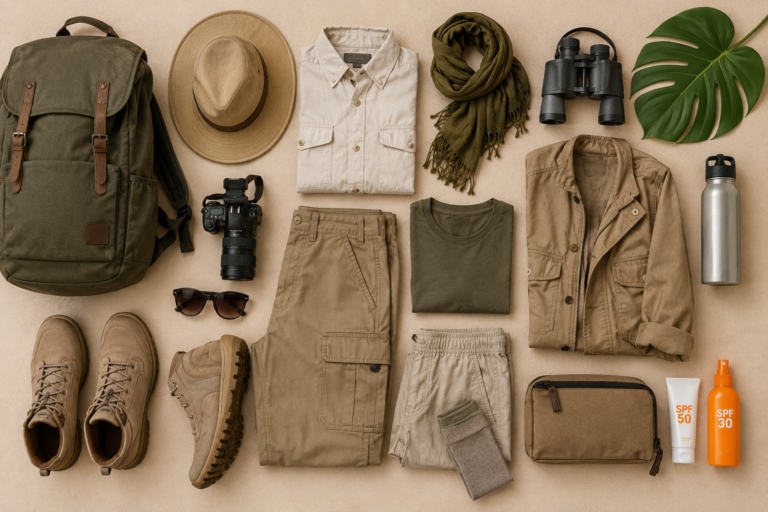
This post contains affiliate links. If you click through and make a purchase or booking, I may earn a small commission at no extra cost to you. The price you pay is exactly the same either way. I only recommend products and experiences I would use myself
I have spent enough time across Africa to know that what you pack for a Kenya safari is not a trivial question.
Temperatures can swing from 7°C at sunrise to 35°C by the afternoon. You will be sitting in an open vehicle in pre-dawn darkness, pulling layers on, and stripping them off again by 10am. The dust on the game drive roads will find its way into everything. The equatorial sun will burn you faster than you expect. And the animals you have flown thousands of kilometres to see will scatter if your clothing makes you look like something that does not belong in their landscape.
Getting this right is not about fashion. It is about being comfortable enough to be present for the moments that matter.
This guide covers everything you need to pack for a Kenya safari, organised by category, with honest affiliate recommendations for the products worth buying and the ones worth leaving on the shelf.
Quick Kenya Safari Packing Checklist
Before the detail, here is the complete at-a-glance reference.
| Category | Essential Items |
|---|---|
| 👕 Clothing | Long-sleeve safari shirts, convertible hiking pants, shorts, fleece jacket, windproof jacket, lightweight rain jacket, thermal base layer, swimwear, comfortable camp clothes. |
| 🥾 Shoes | Trail runners or hiking shoes, comfortable camp sandals or flip-flops. |
| 🧢 Hat & Accessories | Wide-brim safari hat, buff or neck gaiter, polarised sunglasses. |
| 📷 Camera Gear | Camera with telephoto zoom lens, spare batteries, memory cards, power bank, beanbag camera rest, waterproof dry bag. |
| 🔭 Binoculars | 8×42 or 10×42 waterproof binoculars for wildlife viewing. |
| 🔌 Electronics | Power bank, universal travel adapter, charging cables, smartphone charger. |
| 💊 Health & Medicine | Malaria prophylaxis, DEET insect repellent, SPF 50 sunscreen, SPF lip balm, travel first aid kit, oral rehydration salts, antihistamines and any prescription medication. |
| 📄 Travel Documents | Passport, visa (if required), Yellow Fever Certificate (where applicable), hotel and safari confirmations, travel insurance documents, credit/debit cards. |
| 🧸 Kids' Essentials | Junior binoculars, wildlife activity book, snacks, wet wipes, reusable water bottle, travel games and colouring books. |
Kenya's Weather and Why It Shapes Every Packing Decision
Before choosing a single item of clothing, understand what Kenya’s climate actually does to you across a typical safari day.
Kenya’s climate varies significantly across regions and seasons. The country experiences two main dry seasons from January to March and from June to October, which are ideal for wildlife viewing. Wet seasons occur from April to May and again from November to December, often bringing short, heavy rains. Irrespective of the season, temperatures can shift dramatically throughout the day, especially in higher-altitude areas like the Maasai Mara or Laikipia, ranging from approximately 1,500 to 2,500 metres in altitude, where early mornings and evenings tend to be quite cool or even chilly while midday temperatures often soar to over 30 degrees.
That temperature swing is the single most important fact about packing for Kenya. The golden rules of Kenya safari clothing are layering, neutral colours, linen, and sun protection. Everything else follows from these four principles.
Add to that the dust. White clothes will turn the colour of Kenya’s red dust in about two hours of driving on the dusty roads. And the sun. Kenya lies on the equator, and at high altitude the UV index is often very high, rated 8 to 11 out of 12.
Pack for a day that starts cold, turns hot, turns dusty, occasionally turns wet, and ends cool again. The clothing system that handles all of that without requiring you to carry half your wardrobe is what this guide is built around.
What Colours Should You Wear on a Kenya Safari?
Colour choice on safari is not about aesthetics. It is practical and in one case legal.
Earth-toned colours including tan, brown, green, and beige blend into the landscape. Light, breathable fabrics work best in the heat.
The colours to actively avoid:
White turns the colour of red laterite dust within hours and makes you far more visible to wildlife than you should be.
Black and dark navy are problematic for a specific reason. Tsetse flies, which are common in some parts of Kenya, are attracted to dark, contrasting colours, especially blue and black. Their bite can be painful, and while the risk of sleeping sickness is extremely low in tourist areas, it is best to avoid attracting them altogether.
Bright colours including red, orange, and neon shades should stay at home. These vibrant hues can make you highly visible to animals, potentially scaring them away before you get a chance for that perfect photograph.
Camouflage is not a style choice to consider and avoid. It is a legal issue. Camouflage is associated with the military. Kenya banned the sale and wearing of clothes resembling military or police uniform in 2006. Do not pack it.
The right palette is khaki, olive, beige, tan, soft brown, and muted sage green. These are not just traditional safari colours. They are the colours that work.
What Clothes To Pack for a Kenya Safari
Safari Shirts
The most important clothing item you will pack. Long-sleeve safari shirts protect you from the sun, provide warmth in the cold early mornings, keep insects off your arms during dusk drives, and dry fast between wears.
Look for moisture-wicking, quick-dry fabric with UPF sun protection built in. Roll-up sleeves add versatility for the warmer midday hours. Pack three to four in neutral tones.
The Columbia Silver Ridge Long Sleeve Shirt is one of the most consistently recommended safari shirts available. Lightweight, UPF 50 rated, quick-drying, and available in all the right neutral tones. It performs across the full temperature range of a Kenya safari day and holds up to repeated wearing between lodge laundry cycles.
For a slightly more technical option, the ExOfficio Air Strip Shirt offers exceptional ventilation and insect-shield treated fabric for an added layer of protection during dusk game drives.
Convertible Pants
A good pair of safari trousers is worth its weight in gold. Look for lightweight, breathable pants in a neutral colour. Convertible pants that zip off into shorts are a fantastic option, giving you two pieces of clothing in one. You can start the cool morning with long pants and then switch to shorts as the day warms up.
Pack two pairs. This is the one clothing category where the convertible format genuinely saves space and covers multiple scenarios in a single item. Most mid to luxury camps offer laundry service, which means you can reduce how many clothes you bring.
The Columbia Silver Ridge Convertible Pants are the benchmark recommendation in this category. Lightweight, quick-dry, UPF 50, and zip-off at the knee. They handle morning game drives, midday lodge time, and evening dinners without looking out of place in any setting.
Shorts
It was hot during the day, and with the casual attire of the camps, a couple of pairs of shorts work well for warm afternoon game drives, lodge time, and evenings at camp. Two pairs is enough, particularly if your lodge offers laundry.
Fleece or Midweight Jacket
Non-negotiable for any Kenya safari regardless of season. Mornings can be cold so a down-filled jacket or warm fleece is essential. A lightweight one that packs up small works best.
A packable fleece or midweight down jacket that compresses into its own pocket takes up almost no space but makes an enormous difference on a pre-dawn game drive in the Masai Mara when the open vehicle is moving at speed through cold air.
Windproof and Rain Jacket
Pack your morning game drive bag the evening before and make sure you have a jacket available even when it does not look like rain.
The Columbia Watertight II Rain Jacket is lightweight enough to fold into a daypack without taking meaningful space, windproof enough for open vehicle drives, and waterproof enough for Kenya’s short but heavy afternoon showers during the green season. It also functions as a wind layer on cold early mornings when rain is not the concern but wind chill is.
Base Layer
For the dry season between June and October when Masai Mara mornings can drop close to freezing, a thermal base layer worn under your safari shirt makes the difference between enjoying the drive and counting the minutes until the sun rises. A merino wool base layer regulates temperature, dries fast, resists odour between washes, and is thin enough to remove and pack away once the day warms.
Swimwear
If your lodge has a pool, bring your swimwear. A refreshing swim during your downtime between game drives is one of the pleasures of a lodge-based safari. One swimsuit or pair of swim shorts is sufficient.
Evening Wear
The dress code for dinner at camps is casual. A nice lightweight blouse or a versatile shirt worn three times during a ten-day safari split between three camps is perfectly appropriate. Kenyans are relatively modest so make sure you cover your shoulders and knees in more traditional settings.
You do not need formal clothing. You need one or two items that feel slightly elevated from your game drive outfit, clean of dust, and appropriate for eating dinner under the stars.
Best Shoes for a Kenya Safari
For Game Drives and Walking
A duffle bag is the best type of bag to bring for a Kenya safari because it is much easier to handle than a hard-sided suitcase on uneven African terrain. The same practical thinking applies to footwear. Heavy hiking boots are unnecessary for standard game drives. A trail runner or sturdy sneaker handles everything most safari visitors encounter.
The Merrell Moab 3 Trail Runner is the most consistently recommended footwear for safari across multiple environments. Comfortable from day one, grippy on uneven ground around camps and get-out points, water-resistant for wet season conditions, and light enough to wear all day without fatigue.
If you are visiting during the green season from November to May when the Masai Mara gets genuine rainfall and tracks can turn to mud, more ankle support is worth having. The Keen Targhee III Waterproof Hiking Boot provides that support without being heavy, with waterproofing that handles wet grass and soft ground properly.
Wear your boots on the plane and then you do not need to pack any other shoes, which tend to take up a lot of space and weight.
For Camp
A pair of flip-flops or sandals is useful for walking around the room or by the pool. Teva sandals are the practical recommendation here: durable, adjustable, and appropriate for everywhere from the lodge pool to the dining deck.
Best Hat for a Kenya Safari
A wide-brimmed hat is not optional on a Kenya safari. Do not underestimate the sun. Pack a wide-brimmed hat with an under-chin strap so it does not blow away in the wind from an open vehicle.
The Sunday Afternoons Adventure Hat is the benchmark recommendation in this category. UPF 50+ rated, with a wide enough brim to shade your face, ears, and the back of your neck. The chin strap keeps it on during open vehicle game drives. It packs flat without losing its shape. And it does not look ridiculous, which matters more than it should after several days in the bush.
Best Binoculars for a Kenya Safari
Our number one item on the packing list for Kenya is binoculars. On an open-plains safari in Kenya where wildlife can be visible at significant distances, binoculars transform the experience from watching distant shapes to genuinely observing animal behaviour.
For the finest optics available, the Swarovski NL Pure 8×32 delivers an exceptionally wide field of view and optical clarity that makes tracking fast-moving animals in open grassland genuinely effortless. These are the binoculars that professional guides and serious wildlife photographers use and they perform at a level nothing else in their price range matches.
For a strong mid-range option, the Nikon Prostaff 3S 8×42 offers sharp, bright views in the low-light conditions of early morning game drives at a fraction of the Swarovski price. Waterproof, fog-proof, and lightweight enough to wear around your neck all day without fatigue.
For budget-conscious travellers who still want usable optics, the Celestron Nature DX 8×42 delivers solid performance at an entry-level price point. Better than nothing by a significant margin, but the Nikon is worth the extra spend if budget allows.
Whatever pair you choose, make sure it is waterproof and fog-proof. Kenya’s morning temperature drops cause lenses to fog instantly on cheaper uncoated binoculars.
Camera Gear for Kenya Safari Photography
Kenya’s open plains offer some of the finest wildlife photography conditions in Africa. Clean backgrounds, dramatic light at golden hour, and the full cast of African wildlife visible across open grassland. The right camera setup makes an enormous difference.
The Camera
Your phone camera will not capture what you see. A distant cheetah hunt across open grassland, a leopard in a fever tree, a lion crossing at first light — these require reach that only a dedicated camera with a telephoto lens delivers.
The Sony A7 series paired with a 100-400mm telephoto zoom is one of the most capable systems you can bring to Kenya. Full-frame sensor performance in low light, fast autofocus for moving subjects, and the image quality that turns a distant sighting into a photograph worth printing and framing.
For travellers who want strong results without the interchangeable lens complexity, the Nikon P950 bridge camera offers an extraordinary 83x optical zoom in a single body. It covers everything from close elephant encounters to distant bird sightings without requiring lens changes in a moving vehicle.
For a mirrorless mid-range option, the Sony Alpha a6400 with a 70-350mm kit zoom delivers excellent wildlife photography performance at a more accessible price than the full-frame A7 series.
Camera Accessories That Matter
Extra memory cards. The SanDisk Extreme Pro SD Cards are the reliable standard for safari photography, with fast write speeds that keep pace with burst shooting during action sequences. Pack at least two extra cards and keep them in a zipped pocket.
Extra batteries and a charger. Cold mornings and extended shooting drain batteries faster than normal. Pack two spare batteries minimum and charge everything every evening at the lodge.
A power bank. The Anker PowerCore series is the most reliable recommendation across multiple trips and environments. Keep it in your daypack and use it to charge your camera battery, phone, and any other devices during the drive.
A beanbag camera rest. Rested on the vehicle window frame it gives you a stable platform for long telephoto shots without a tripod. Lightweight, inexpensive, and it makes a genuine difference to image sharpness on moving vehicle drives.
A dry bag or dustproof camera bag. Kenya’s dusty game drive roads and occasional rain require protection for your camera gear. An inner dry bag inside your daypack protects equipment from both dust and unexpected showers.
Important: Drones are prohibited in Kenyan national parks and reserves. Do not bring one.
Electronics and Power
Universal Travel Adapter
Kenya uses Type G plugs, the same three-pin rectangular system used in the UK. If you are coming from South Africa, the USA, Europe, or most other international origins, you need an adapter. A universal travel adapter handles every plug type and is worth carrying in your hand luggage rather than your checked bag.
Power Bank
Game drives can last six to eight hours. Your phone and camera batteries will not last that long without a top-up. The Anker PowerCore 26800 is the high-capacity recommendation for safari use, with enough charge to fully replenish a phone four to five times and keep a camera battery charger running during a midday lodge stop.
Charging Cables
Bring your own and bring spares. Lodge USB ports vary in output and your phone manufacturer’s cable always charges faster than a generic replacement.
Garmin GPS Watch
Optional but genuinely useful for travellers doing walking safaris or multi-activity itineraries. Tracks routes, sunrise and sunset times, and altitude across Kenya’s varied terrain.
Health Essentials: What You Must Have Before You Go
Malaria
Kenya is a malaria zone. This is the most important health consideration for your visit and it requires action before you travel, not after you arrive. Consult your doctor or a travel medicine clinic for appropriate prophylaxis based on your specific health history, the regions you are visiting, and your travel dates.
Your mosquito defence should work in layers. First, prescription antimalarial medication taken as directed. Second, DEET-based insect repellent applied every evening when mosquitoes become active. Third, long sleeves and trousers from dusk onwards. Fourth, a mosquito net at lodges that provide them.
The Sawyer Picaridin Insect Repellent is one of the most highly regarded options for safari use. Effective against mosquitoes and tsetse flies without the harsh smell or skin irritation of high-DEET formulas. Apply it to both skin and clothing for maximum protection.
Yellow Fever Certificate
Kenya requires proof of yellow fever vaccination if you are arriving from a yellow fever risk country. Check the current requirements for your specific origin country before travel. Carry the physical yellow fever card with your passport as it may be checked at the border.
The Medical Kit
Pack a personal medical kit covering: your prescribed malaria prophylaxis, a broad-spectrum pain reliever, antihistamine for insect bites and allergic reactions, oral rehydration sachets for heat exhaustion or stomach issues, a basic wound care kit with plasters and antiseptic, After Bite cream for insect stings, motion sickness tablets if long vehicle drives affect you, and all personal prescription medications in quantities covering your full trip plus additional days.
The Adventure Medical Kits Ultralight Watertight kit is a compact, well-organised first aid solution that covers the most common safari medical needs without bulk.
Sun Protection
Kenya lies on the equator and at high altitude the UV index is often very high. Cover up with a wide-brimmed hat, sunglasses, and high-SPF sunscreen on exposed skin.
Neutrogena Ultra Sheer Dry-Touch Sunscreen SPF 50 is lightweight, non-greasy, and absorbs quickly without leaving a white cast. Apply every morning and reapply after three hours outdoors. Pay particular attention to the tops of hands, forearms, the back of the neck, and the tops of ears.
SPF lip balm for lips that crack quickly in Kenya’s dry bush air. A moisturiser for skin that dries out between the sun, wind, and dust of full-day game drives.
Best Backpack for Safari Day Drives
A backpack does not need to be comfortable to wear since you will just have it in the vehicle with you mostly. It needs to hold your camera, water, hat, sunscreen, jacket, passport, and binoculars.
The Osprey Daylite Daypack is the most recommended safari daypack across multiple environments and traveller types. 13 litres of capacity handles everything you need for a full game drive day without bulk. The organisation is logical, the padding protects camera equipment adequately, and it compresses flat when empty for packing inside your main luggage.
What To Pack for Kenya in the Dry Season (June to October)
The dry season from June to October is the best time for wildlife viewing in Kenya. It is also the most demanding season for cold morning temperatures, particularly in the Masai Mara which sits at altitude.
Your dry season packing additions beyond the core wardrobe:
A thermal base layer for pre-dawn game drive starts when temperatures in the Mara can drop below 10 degrees. Merino wool is ideal.
A packable down jacket that compresses into its own pocket for the cold morning hours. Remove and stow it as the sun rises.
A buff or neck gaiter because dust is one of the defining physical experiences of a dry season Kenya safari. It keeps dust out of your face on gravel roads, adds warmth around the neck in cold air, and protects your skin from wind on open vehicles.
A beanie for the earliest morning starts and evening sundowners when the temperature drops quickly after sunset.
Thicker socks for the cold mornings. Pack enough pairs to change daily during the dusty dry season.
The Earth Pak Waterproof Dry Bag is useful even in the dry season for protecting camera gear and electronics from the remarkable quantities of fine red dust that penetrate standard bags on gravel road game drives.
What To Pack for Kenya in the Green Season (November to May)
Wet seasons occur from April to May and again from November to December, often bringing short, heavy rains. Green season Kenya is lush, beautiful, and requires specific preparation.
A waterproof rain jacket is the most critical addition. Kenya’s green season rain comes fast and heavily without much warning. The Columbia Watertight II handles it without adding meaningful weight to your daypack.
Quick-dry clothing becomes more important in humid conditions. Avoid anything that stays wet for hours against your skin.
Waterproof hiking boots if you plan to walk during the green season. The Masai Mara in the rains can produce genuine mud that requires proper waterproofing underfoot.
The Earth Pak Dry Bag is essential for green season safari use. Camera gear, electronics, and documents need waterproofing against both the rain and the possibility of a water crossing.
Additional insect repellent. Green season brings higher mosquito activity. Pack more than you think you need and apply it more consistently.
What To Pack for Kids on a Kenya Safari
Taking children to Kenya is one of the most extraordinary things you can do as a family. The practical adjustments for packing with kids are straightforward.
Children’s clothing follows the same neutral-colour, layer-based principles as adult clothing. Pack extra sets for younger children who need changes more frequently.
Junior binoculars transform the game drive experience for children. When they can see what the adults are pointing at, engagement increases dramatically. The Kidnoculars Junior Binoculars are designed for smaller hands and faces and are durable enough to survive enthusiastic use.
A wildlife identification book for children. Several publishers produce beautifully illustrated children’s guides to Kenya’s mammals and birds. They provide genuine education between sightings and keep children occupied during long drives between wildlife encounters.
Snacks and water for long game drives. Lodge shops sell basics but not necessarily what your children specifically want at 7am when hunger strikes in the middle of the Mara.
Wet wipes for the dust, the sticky hands, and the inevitable moment when something spills in the vehicle.
Travel games and colouring books for midday lodge time when the heat means rest rather than activity. Melissa and Doug travel games are compact, durable, and genuinely engaging for a wide age range.
A small backpack for children so they can carry their own water, snacks, binoculars, and wildlife book. Ownership of their own kit makes children feel part of the expedition rather than passengers on it.
Editor's Recommended Safari Picks
| Item | Recommended Product | Why I Recommend It |
|---|---|---|
| 👕 Safari Shirt | Columbia Silver Ridge Long Sleeve | Lightweight, UPF 50 sun protection, quick-drying fabric and ideal safari colours. |
| 🥾 Convertible Pants | Columbia Silver Ridge Convertible | Zip-off legs convert to shorts, breathable material and UPF 50 protection. |
| 🥾 Hiking Shoes | Merrell Moab 3 | Extremely comfortable, excellent grip and water-resistant for safari conditions. |
| 🧢 Safari Hat | Sunday Afternoons Adventure Hat | UPF 50+, wide brim, adjustable chin strap and folds easily into luggage. |
| 🌧️ Rain Jacket | Columbia Watertight II | Lightweight, waterproof, windproof and packs into a small space. |
| 🎒 Daypack | Osprey Daylite | Perfect size for carrying water, camera gear, binoculars and travel documents. |
| 🔭 Binoculars | Swarovski NL Pure 8×32 | Exceptional image clarity, lightweight design and outstanding wildlife viewing performance. |
| 📷 Camera | Sony A7 Series with Telephoto Zoom Lens | Excellent low-light performance and superb image quality for wildlife photography. |
| 💾 Memory Cards | SanDisk Extreme Pro | Reliable, high-speed storage designed for large photo and video files. |
| 🔋 Power Bank | Anker PowerCore 26800 | Large battery capacity with fast charging for phones, cameras and other devices. |
| 🦟 Insect Repellent | Sawyer Picaridin Insect Repellent | Highly effective mosquito protection without the strong smell associated with DEET. |
| 🛡️ Waterproof Dry Bag | Earth Pak Waterproof Dry Bag | Protects electronics and valuables from dust, rain and river crossings. |
| ⛑️ First Aid Kit | Adventure Medical Kits Ultralight | Compact, well-organised and contains the essentials for minor travel emergencies. |
| 🧒 Kids' Binoculars | Kidnoculars Junior Binoculars | Durable, lightweight and perfectly sized to keep children engaged during game drives. |
What To Leave Behind
Skip jeans because they are heavy and take forever to dry. No camouflage clothing because it is illegal in Kenya. Leave high heels, fancy jewellery, and strong perfumes at home. Strong scents can attract insects and disturb animals.
Leave behind drones, which are prohibited in all Kenyan national parks. Leave behind hard-shell suitcases. A duffle bag is much easier to handle than hard-sided luggage on uneven African terrain, and many domestic charter flights in Kenya impose strict soft-bag-only requirements. Leave behind anything that requires more electricity than a lodge room can reliably provide overnight.
Pack light. Most mid to luxury camps offer laundry service, which means you can get away with clothes for three to four days and have everything clean for the next stage of the trip.
FAQ
What colours should you wear on a Kenya safari?
Khaki, olive, beige, tan, and muted brown or green. These neutral earth tones blend into the savanna landscape, do not attract tsetse flies the way dark colours do, and hide the inevitable dust. Avoid white, black, navy, bright colours, and camouflage.
Can you wear jeans on a Kenya safari?
Technically yes but practically no. Jeans are not appropriate clothes for a Kenya safari. They are heavy, get sweaty, and dry slowly in Kenya’s heat. Convertible lightweight trousers do the same job in a fraction of the weight and bulk.
Do I need hiking boots for Kenya?
For standard game drives, no. A good trail runner like the Merrell Moab 3 handles everything you encounter during a vehicle-based safari. If you are doing walking safaris on rough terrain or visiting during the green season when tracks get muddy, a waterproof hiking boot with ankle support is worth the extra weight.
Is camouflage clothing illegal in Kenya?
Yes. Kenya banned the sale and wearing of clothes resembling military or police uniform in 2006. Do not pack anything with a camouflage pattern.
Should I bring binoculars to Kenya?
Absolutely and without hesitation. On the open plains of the Masai Mara, binoculars close the distance between you and distant wildlife in a way that transforms the experience. Do not go without them.
How cold does Kenya get at night on safari?
Yes, mornings and evenings can be very cold, especially in Ngorongoro and on early game drives. In the Masai Mara specifically, pre-dawn temperatures during the dry season can drop to single figures. A fleece, windproof jacket, and beanie are essential for early morning game drive starts.
What luggage is best for a Kenya safari?
A soft-sided duffel bag. Many domestic charter flights in Kenya impose strict luggage limits of 15 to 20 kilograms with soft bags only. Hard-shell suitcases are impractical on bumpy bush tracks and may not be permitted on small aircraft transfers between camps.
Do I need insect repellent for Kenya?
Yes. Kenya is a malaria zone and mosquitoes are most active from dusk onwards. Use DEET of 30 percent or higher or Picaridin-based repellents and apply on exposed skin and clothing. Also pack for tsetse flies during game drives by avoiding dark clothing.
Can I wear trainers on safari?
Yes. A good pair of trail runners or sturdy sneakers is appropriate for vehicle-based game drives and general lodge use. They are lighter and more comfortable for most visitors than dedicated hiking boots.
Is laundry available at safari lodges in Kenya?
Yes, most mid to luxury camps offer laundry service. This means you only need enough clothing for three to four days and can pack significantly lighter than you might otherwise plan for a seven to ten day safari.
Written by Tina. I founded 54TravelVibes to build the Africa travel guides I always wished existed. 54TravelVibes covers 54 iconic African destinations across South Africa, Kenya, Tanzania, and Morocco. Explore all destinations →